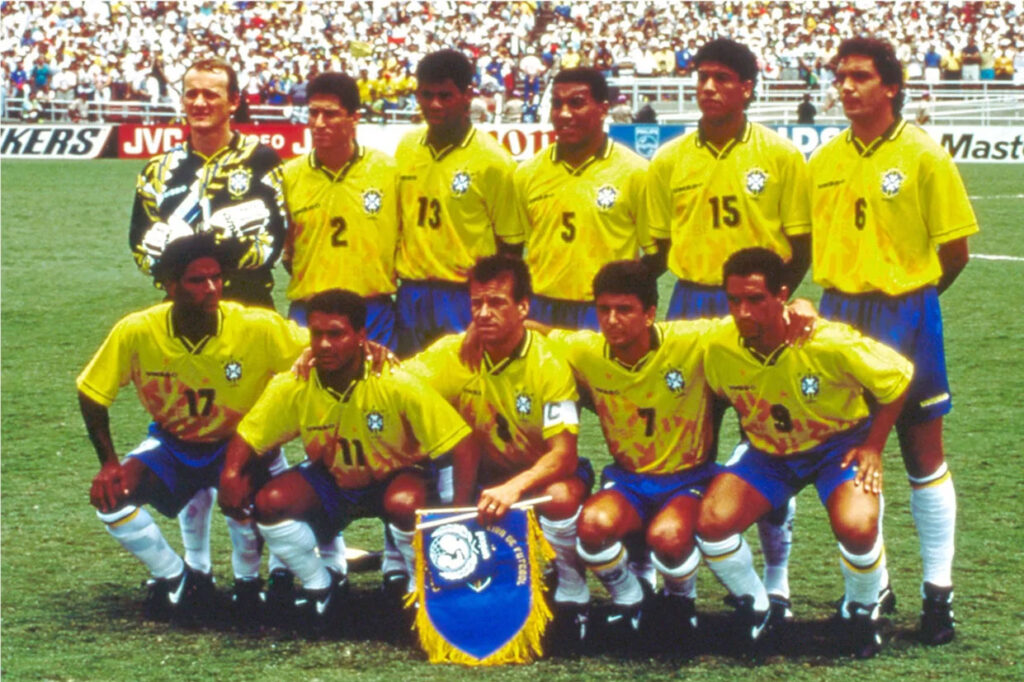
For most of the last thirty years, Nike has been so woven into the World Cup that it is easy to forget the brand was once an outsider in the sport. In the summer of 1994, football was the one frontier Nike had not figured out.
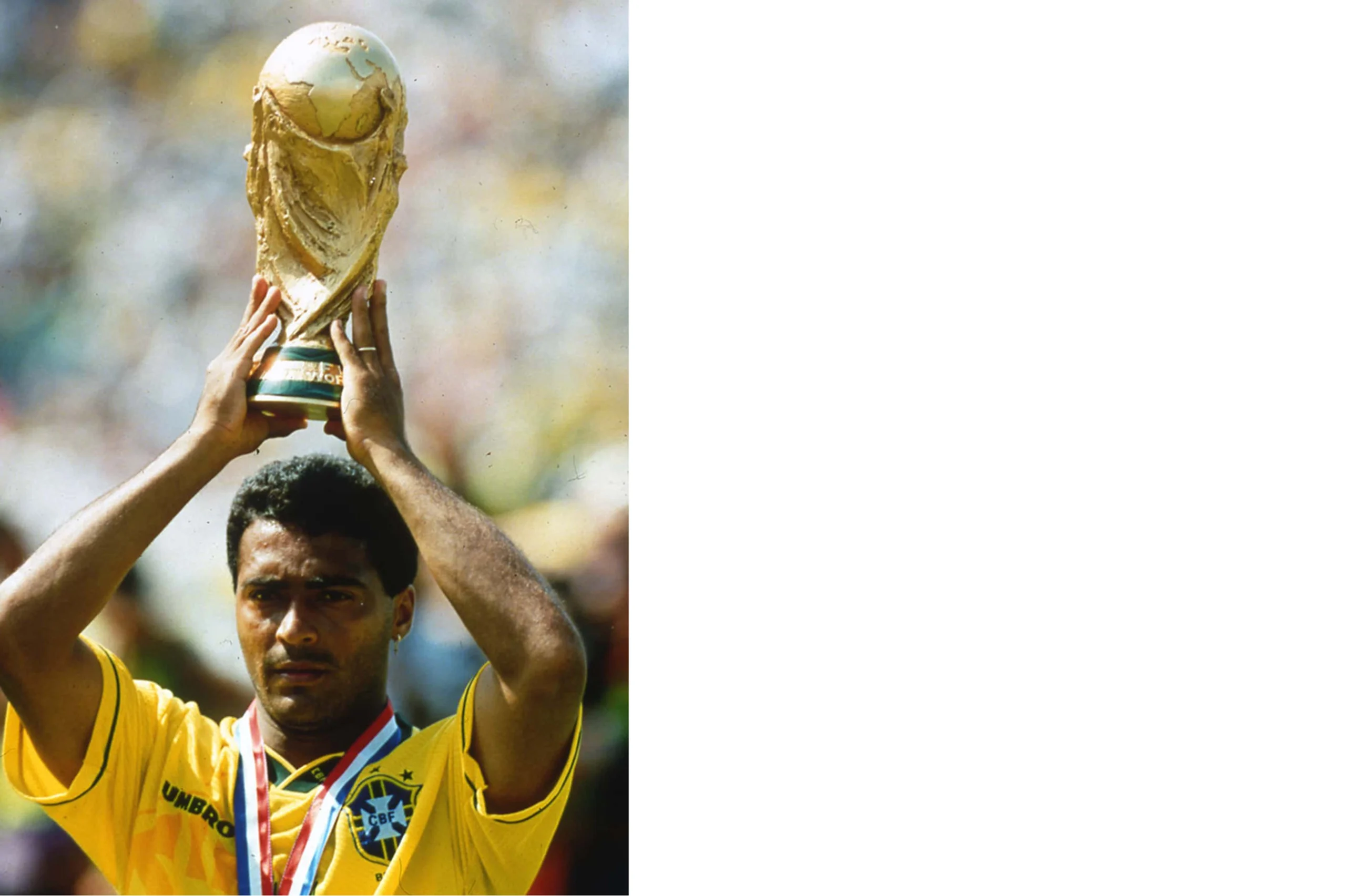
Then came July 14, 1994, the World Cup final at the Rose Bowl. Brasil and Italy, more than 94,000 people in the stands, the temperature past 80 degrees. Eight of the Brasil players on the pitch were wearing Nike Tiempos. Watching from the seats was Phil Knight. By Nike’s own account from its Department of Nike Archives, what caught his attention was not the score but the way the Brasileiros played, the joy of it, the thing we now call joga bonito. Two days later he pulled his global sports marketing director aside and said three words: “I want Brasil.”
That is where the modern story of Nike football boots begins. Not with a shoe. With a team, and a feeling.
The four-year mandate
To understand how big that ask was, you have to know where Nike stood. Inside headquarters in Oregon they still called it soccer. The brand had some relationships, modest success in the U.K. and Scandinavia, and not much else. “We meant absolutely nothing in the sport to anybody,” said Sandy Bodecker, the man Knight tapped to run the new Nike Football division. The goal was almost absurd in its simplicity: become a real force in the global game by the time France hosted the 1998 World Cup. Four years.
Bodecker’s read on the problem is the part I keep coming back to. Nike had no heritage in football, and plenty of European insiders were happy to remind them of it. Instead of hiding from that, he leaned in. “We wanted to be the new heritage of the sport,” he said. “We liked that, because we didn’t have an old heritage.” Bodecker passed in 2018, and that line reads like a thesis for everything that followed.
People before product
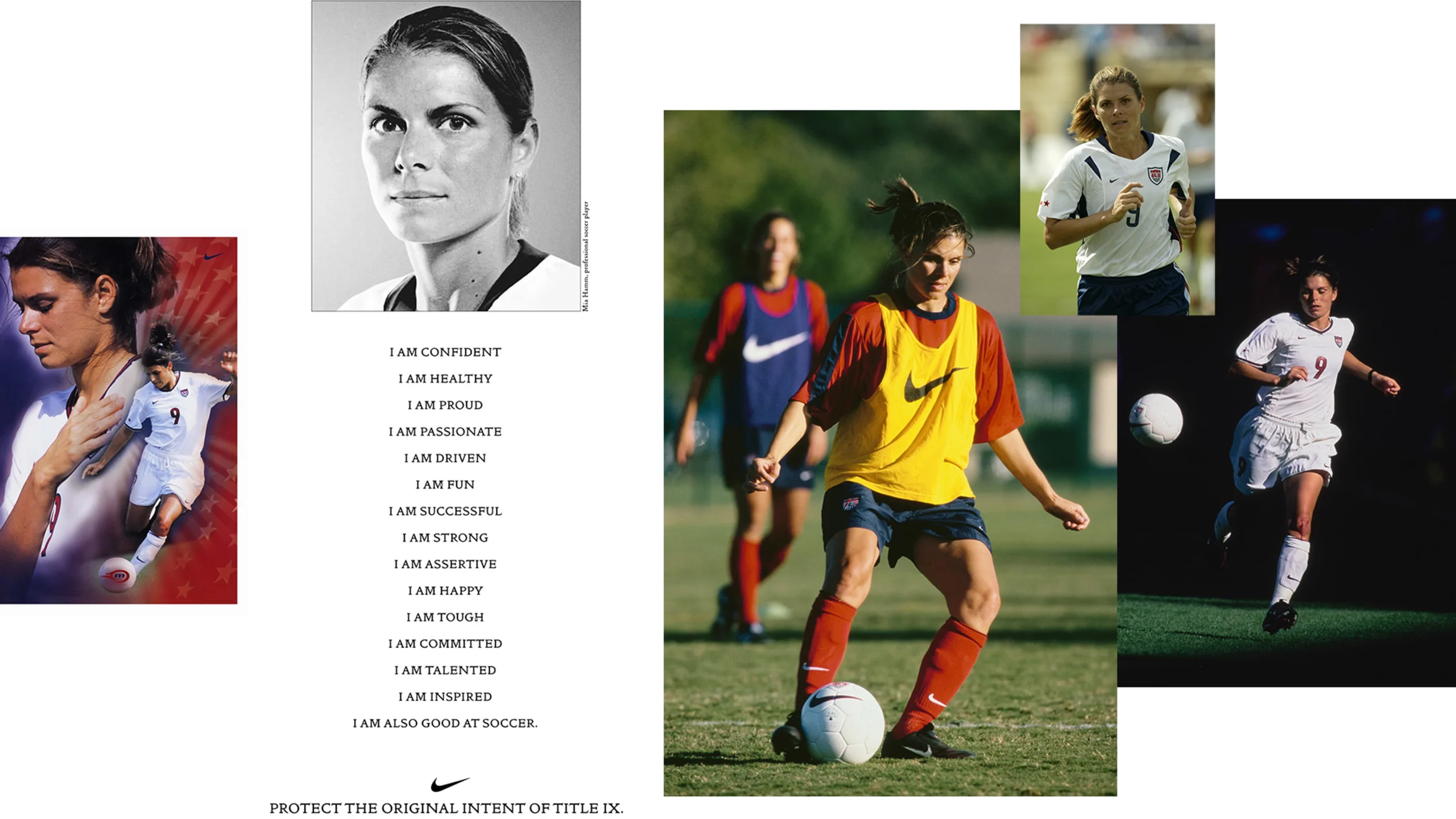
The next two years were about people, not footwear. Nike signed the U.S. Soccer Federation, men’s and women’s, ending a 28-year run with a competitor. It signed Mia Hamm, on a deal a marketing exec first sketched on a napkin in the basement of a Chapel Hill bar after watching her score twice in six minutes at the 1992 NCAA Championship. Hamm has said the appeal was never just the contract… it was that Nike actually asked the women’s team how their gear should fit and built footwear for women’s feet. Years later a building on Nike’s campus would carry her name.
Then, in July 1996, the prize. Nike signed the Brasil national federation, the most monumental deal the sport had seen. Wall Street did not get it right away, and Nike’s stock dropped 5 percent the day it was announced. The people who had spent two years flying to Brasil for lunch were not worried. They knew what they had.
The ads that made the brand
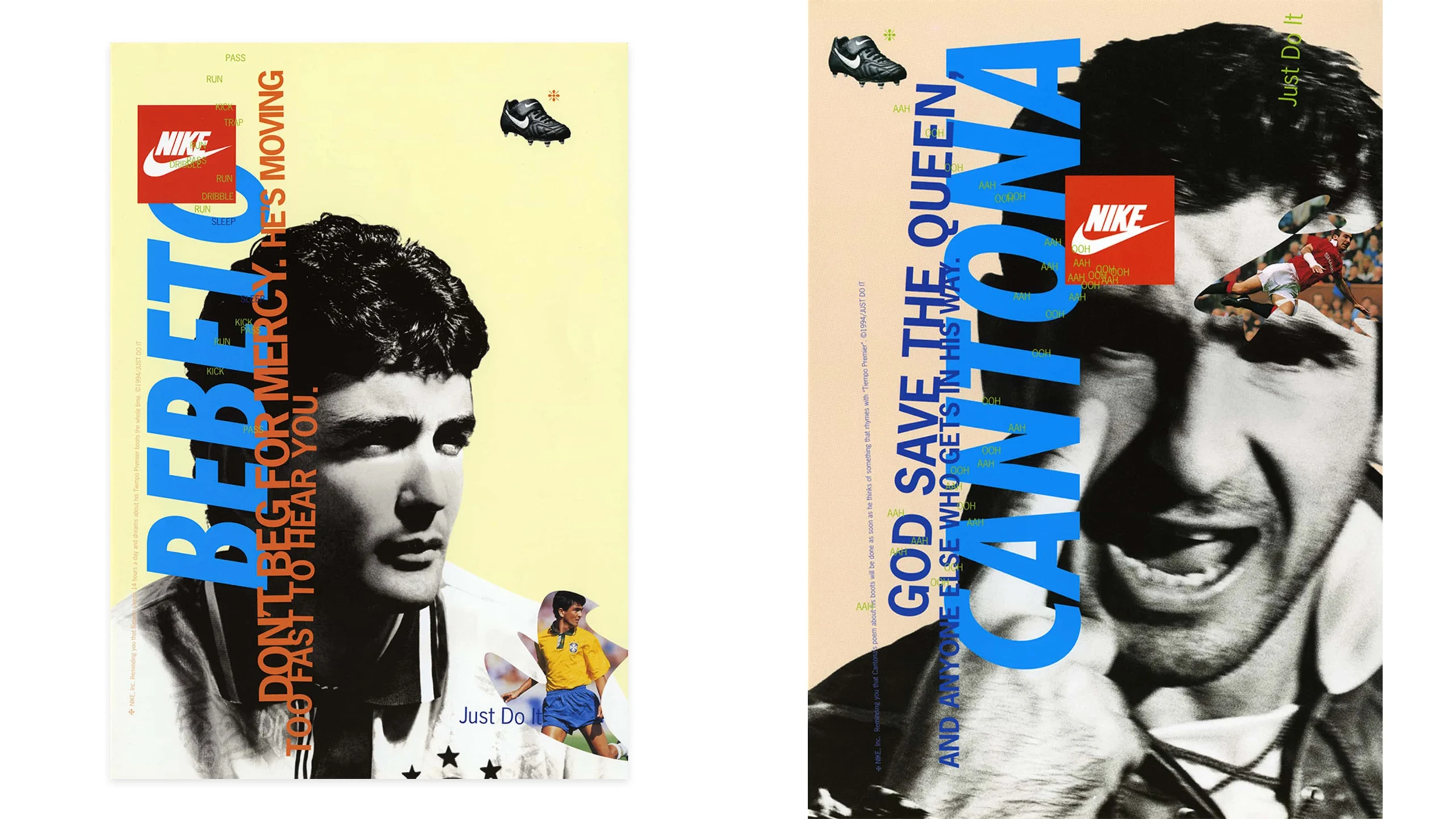
What separated Nike was that it understood football as culture, not just sport. In 1996 came “Good vs. Evil,” shot over roughly 16 nights in a Tunisian coliseum, ending with Eric Cantona flipping his collar and delivering one word, “Au revoir.” Kids across Europe started flipping their collars in the backyard. A year later came “Airport,” directed by John Woo, the newly signed Brasil squad playing an impromptu match through a Rio terminal between Christmas and New Year’s. No villain, no script, just Brasil being Brasil. It was the first time Nike built a campaign around a team instead of a star. Bodecker called it a watershed.
Underneath the ads, Pierre-Laurent Baudey was putting language to the whole thing. He called it Brilliant Football, captured in one Portuguese word, alegria, joy of life. Nike had just signed a young Ronaldo, and he was about to make that philosophy walk.
A different kind of boot
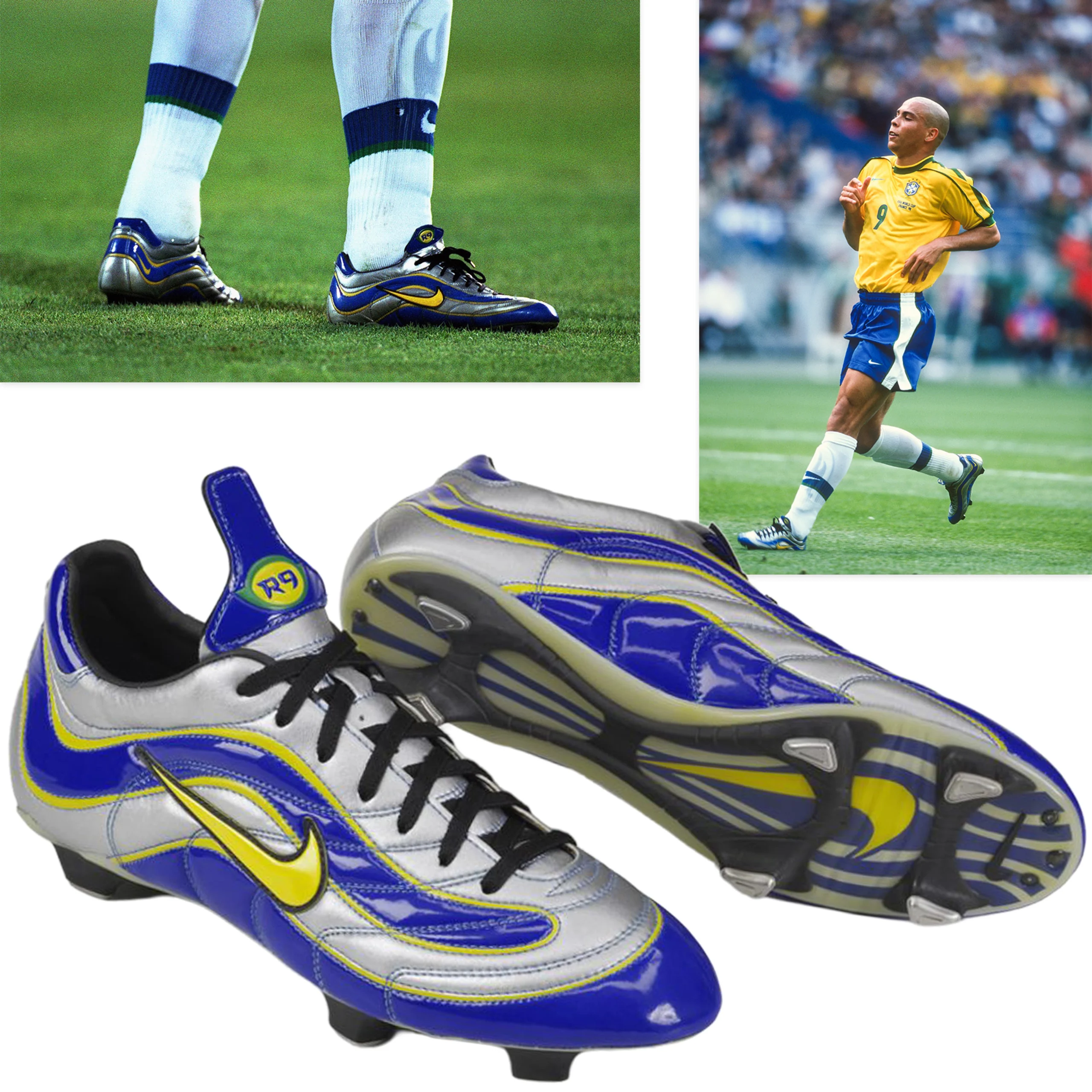
The boot came last, and that order matters. By 1997 the team was signed, the films were landing, the philosophy was set. What Nike needed was a shoe worthy of it. The work happened in Montebelluna, Italy, the old heart of European bootmaking, where every component went to a specialist who did nothing else. Out of that came something the sport had never seen. A Nike product lead named Tim Smith started with a track spike, screwed in cleats, and sketched it into a football boot. The upper was the radical part: a synthetic called KNG-100, lighter and thinner than leather, that did not stretch or soak up water, finished with a ball-control coating borrowed from Italian racing motorcycle chassis. Nike handed prototypes to Brasil’s players and told them it was the best leather they had ever used. It was not leather at all. They refused to give them back.
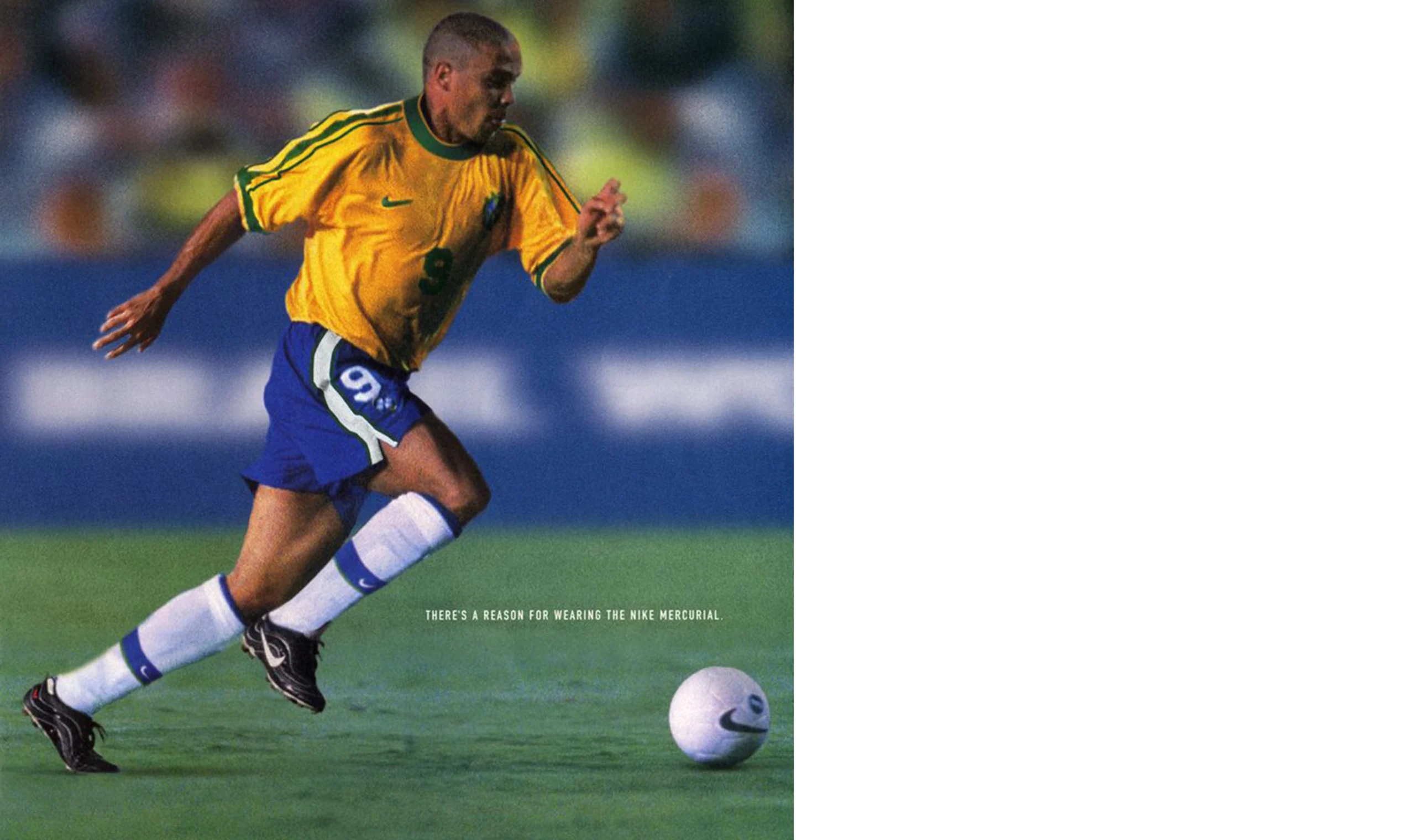
Smith named it the Mercurial, for a word that means quickly changing in nature. It debuted at France 1998 on Ronaldo’s feet, blue and yellow and chrome, the first significantly colored boot football had seen. Nike planned to make 20,000 pairs that first year and finished at 80,000.
Heritage, built
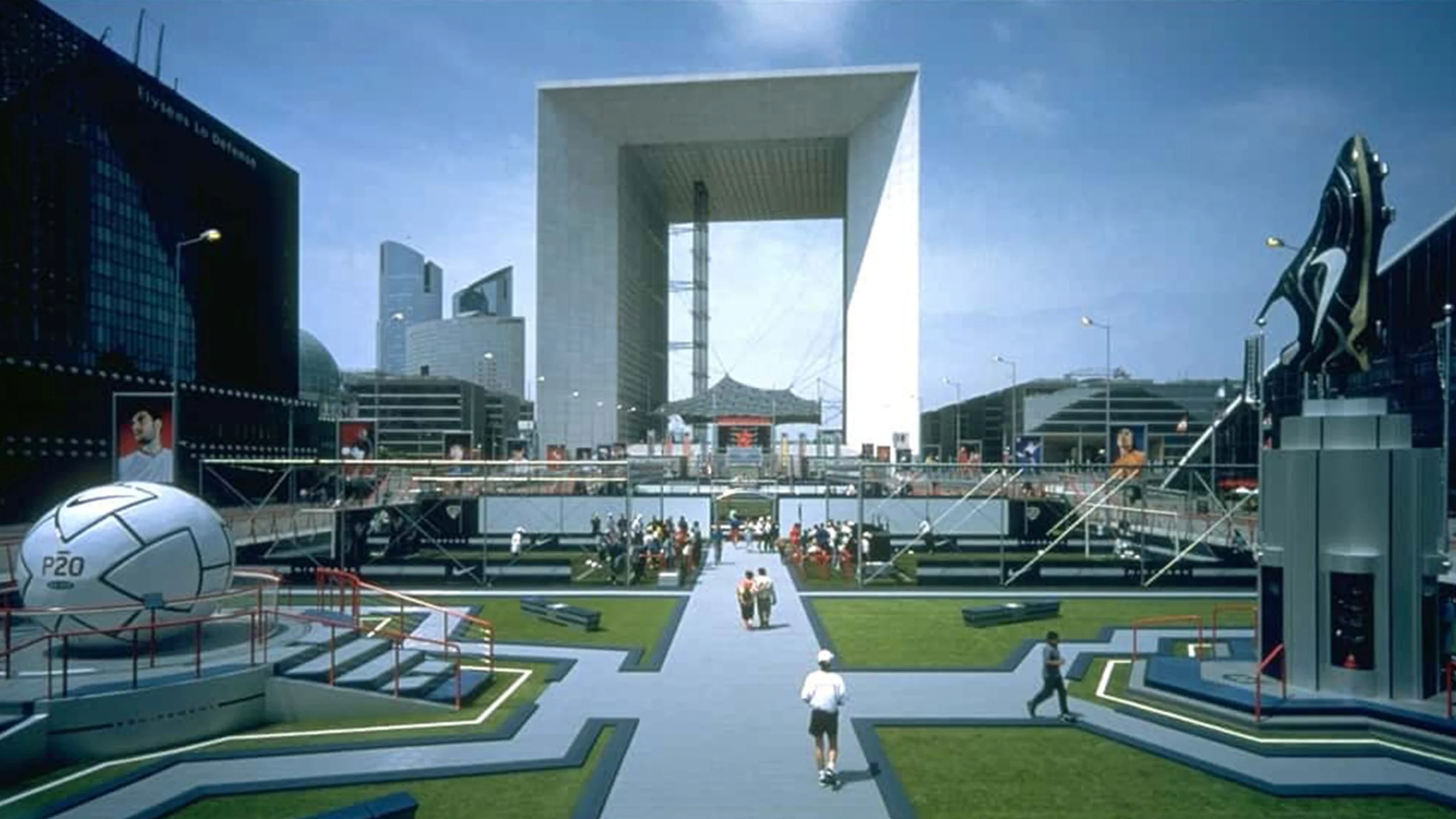
France won that World Cup, not Brasil, but the trophy was almost beside the point. Nike arrived in Paris outfitting six national teams and built a 70,000-square-foot installation called Nike Park at the Arche de la Défense, with a giant Mercurial mounted on the arch and Brasil’s 1994 trophy sitting in a glass case at the center. Four years earlier the brand meant nothing in football. By the summer of 1998 it had built its own heritage, exactly like Bodecker said it would.
The World Cup is back on American soil this summer, the first time since that hot afternoon at the Rose Bowl. Every Mercurial on the pitch traces back to a track spike, a napkin in a Chapel Hill bar, and three words Phil Knight said out loud in 1994.
The Mercurial opened a lineage that ran through the Total 90 and everything after it, which is what makes it almost funny that Nike later let the Total 90 trademark lapse and had to watch someone else claim it, a story I broke down in The Art of the Turnover. That is the kind of thing we keep digging into over at Sneaker History, where the boots are never really the point. The people who built them are.
Source and reporting: Nike, Inc., “The Four Years That Launched Nike Football,” Department of Nike Archives.
Read next: The complete 2026 World Cup archive, every match, every goal, and the kit and boot each one was scored in.
Shop Your Favorite Brand's World Cup Gear
Boots, kits and more from the brands defining the tournament.