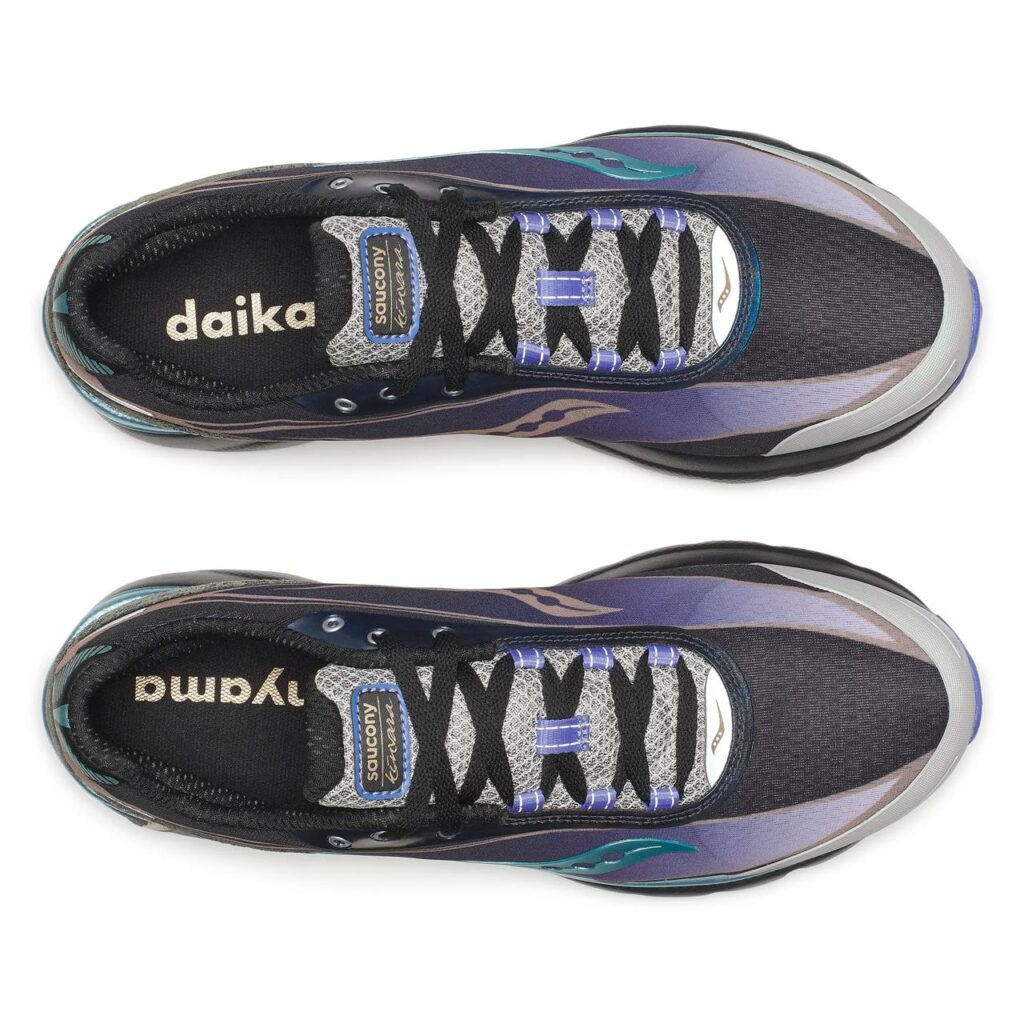
The Kinvara 1 spent its first life as a running shoe that argued with everything else on the wall. Sixteen years later Saucony has put it back on shelves as something else entirely. The Daikanyama edition arrived September 18 in a black and Aureate fade, part of a four shoe capsule named after a Tokyo neighborhood, and the giveaway sits on the tongues, where the neighborhood’s name is split in half so it only reads properly when both shoes are side by side.
Saucony introduced the Kinvara in 2010, and the timing was the whole argument. The running market was mid swing toward less shoe, and the brands were chasing each other toward lower stacks, thinner uppers and lighter builds. The Kinvara was Saucony’s answer, a low profile trainer on an open mesh upper that stripped out the structure runners had spent two decades being told they needed. It was not a racing flat and it was not a stability shoe. It landed in a category that barely existed yet, and it sold to people who wanted a daily trainer that got out of the way.
What happened afterward is why the shoe still carries weight. The minimalist swing overcorrected, the market came back toward cushioning, and it kept going until max stack became the default setting. The Kinvara stayed in the line through all of it. Saucony is selling a Kinvara 16 today, sixteen numbered versions on from a shoe whose founding philosophy went out of fashion long before the count got that high. Most models that define a moment disappear when the moment ends. This one just kept getting renumbered until it was old enough to come back as itself.
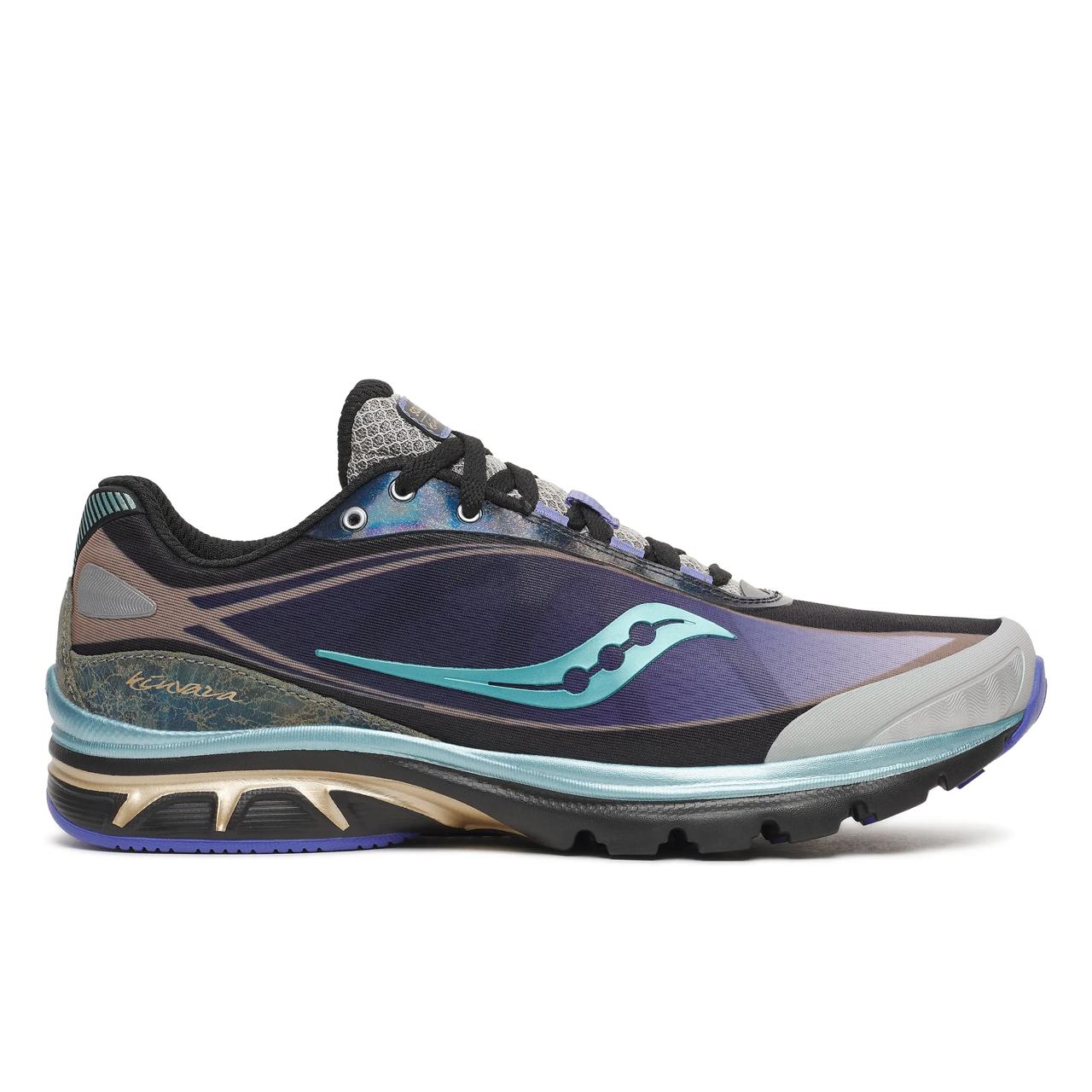
The Daikanyama build keeps the original’s proportions and spends its budget on finish. Saucony describes fade colors and updated graphics over the low profile and open mesh, and the product photography bears that out. A black base lifts through violet into teal across the toe, a champagne midsole stripe explains the Aureate half of the name, and a periwinkle outsole is the loudest thing on the shoe. The overlays carry an iridescent sheen rather than a flat print, so the upper shifts depending on where the light lands.
The neighborhood reference is not decoration either. Saucony credits the collection to Josh Fraser, a designer who lived in Tokyo, and chief product officer Brian Moore framed the brief around Daikanyama’s architecture, brutalist lines softened by ivy on concrete and weathered steel. That reads as marketing copy until you look at the shoe and find the muted tones doing exactly that job. The split tongue print is the one piece of real wit in the set, a wordmark that fails as branding on a single shoe and only works as a pair.
The reclassification is the part worth arguing about. Saucony has quietly built a second business out of its own archive, most recently by cutting the heel off a retro runner, and it has a name for the shelf all of it goes on: retro tech. The Kinvara 1 is filed under Originals now and sold on lifestyle terms, which means a shoe engineered to solve a specific performance problem is being sold on the strength of looking like 2010. That is the same trade every brand running an early 2000s revival has made, and it tends to work better when the silhouette has a name that civilians recognize.
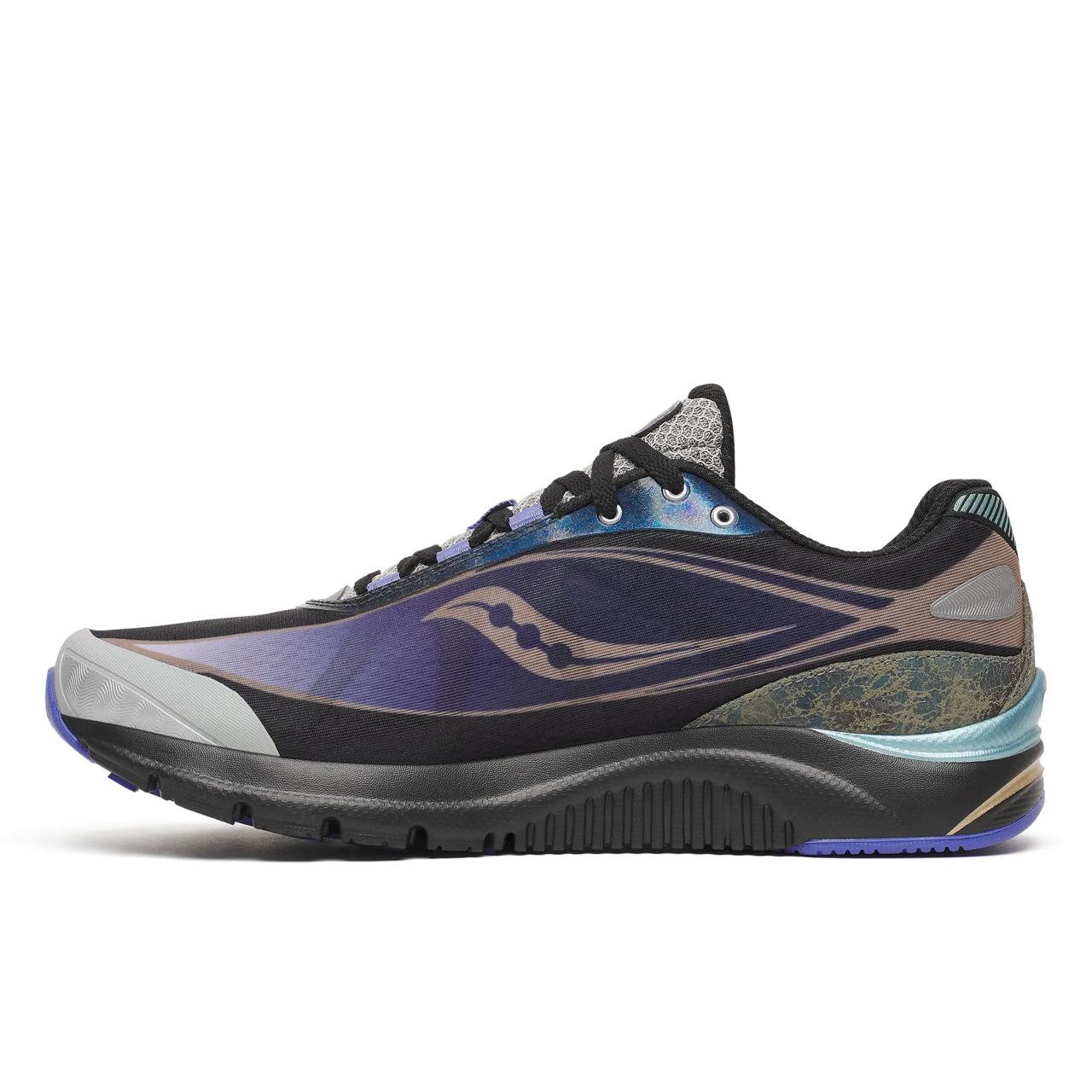
The Kinvara’s problem is that its fame was earned inside run specialty rather than on a court or a runway. Saucony is betting the shape carries anyway, and the fade treatment is doing a lot of the persuading. On the evidence of this capsule the brand knows it, because the pack leans on colour and finish rather than on anyone remembering what the shoe was built for.
Retail is $150, and the useful comparison is already in Saucony’s own catalogue. The standard Kinvara 1 retro has been in the line at $140, offered in Black and Ebony, Ivory and Silver, Sage and Trek, and Torte and Bronze. The Daikanyama premium is ten dollars, and it buys the fade, the mixed finishes and the tongue print. Inside the capsule only the ProGrid Guide 7 asks less at $145, with the ProGrid Omni 9 at $174 and the Endorphin Speed 5 at $175 above it. For the shoe carrying the most history in the set, that is a modest place to land.
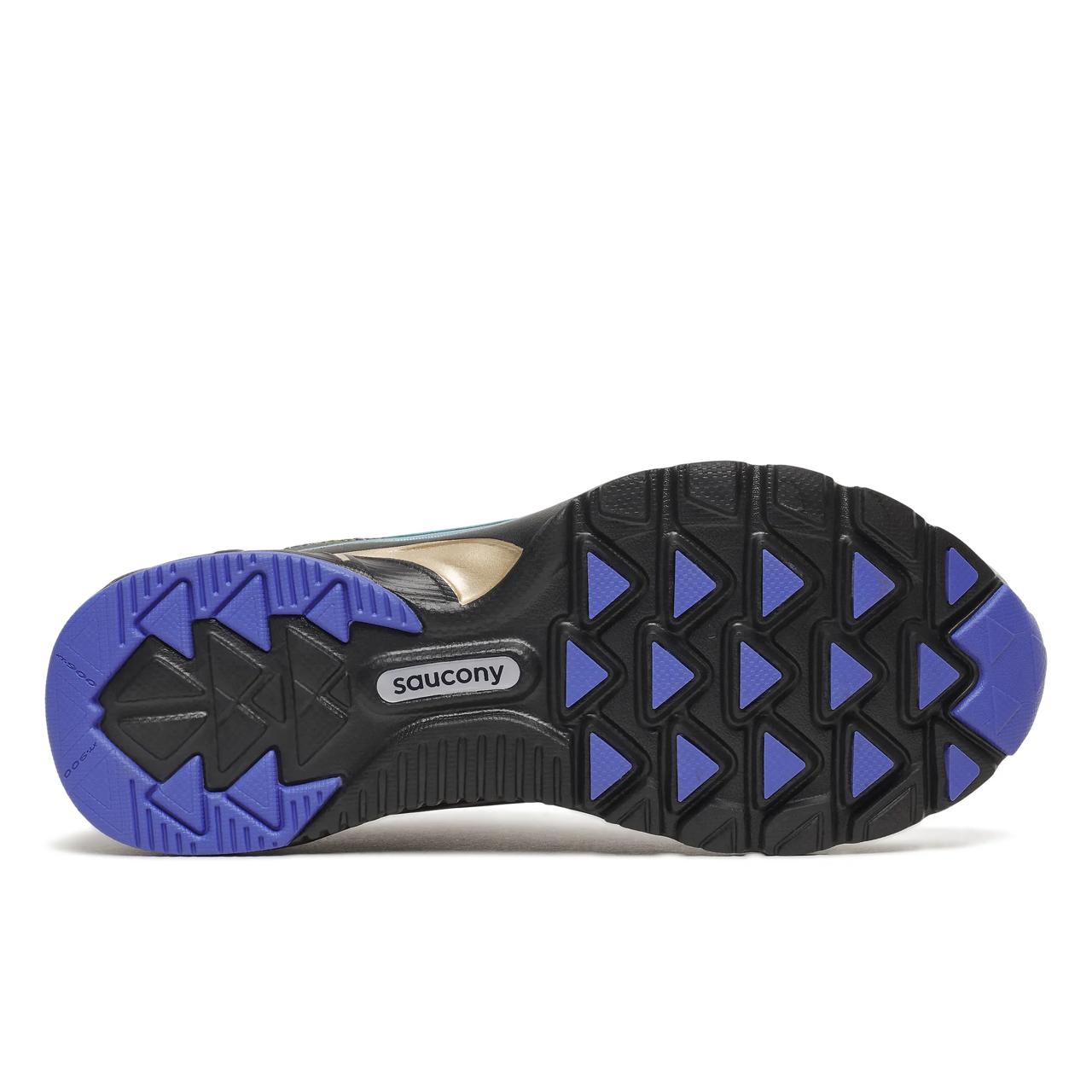
The Daikanyama Kinvara 1 released September 18 under style code S101838-1001 in the Black and Aureate colorway, priced at $150 and offered in unisex sizing from 3.5 to 14. It is available through Saucony and at select retailers, alongside the rest of the capsule. Our read on the ProGrid Omni 9 from the same collection covers the least obvious shoe of the four.
Where To Buy
Affiliate links open each retailer’s live search, so they always resolve. We may earn a commission.
Find This Pair
- eBaySizes Available
Live retailer stock, refreshed hourly. Stock and prices change fast. Some links are affiliate links and we may earn a commission.