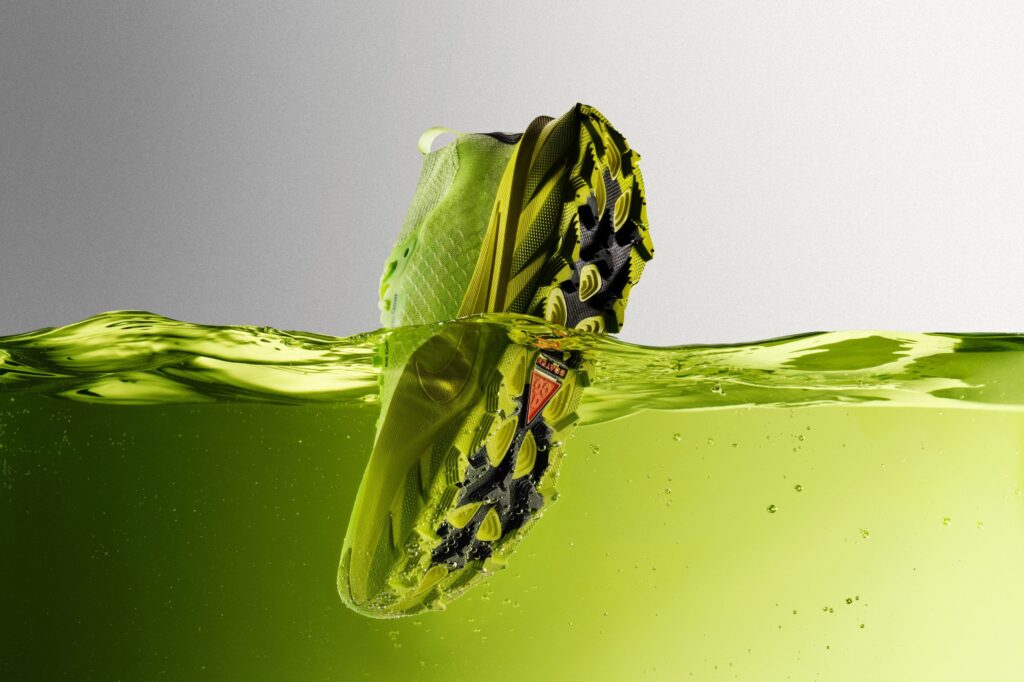
Shea Aquilano runs in places where a gear failure is not an inconvenience, it is a problem you carry for another forty miles. So when a member of Nike‘s All Conditions Racing Department describes a new shoe by saying it is one less thing to think about, that is close to the highest praise a trail runner can give.
“The thing I love most about Picklejus is that it’s one less thing to think about,” Aquilano said. “I know my feet and legs are taken care of, which frees me up to focus on my race, the terrain and the challenge in front of me.”
That is the shoe ACG unveiled on August 27, 2026. The Picklejus is a big-mountain trail runner, and it is the first ACG footwear innovation developed through the Nike Sport Research Lab, the group that normally spends its time on marathon spikes and basketball cushioning rather than on shoes built for wet granite at altitude.
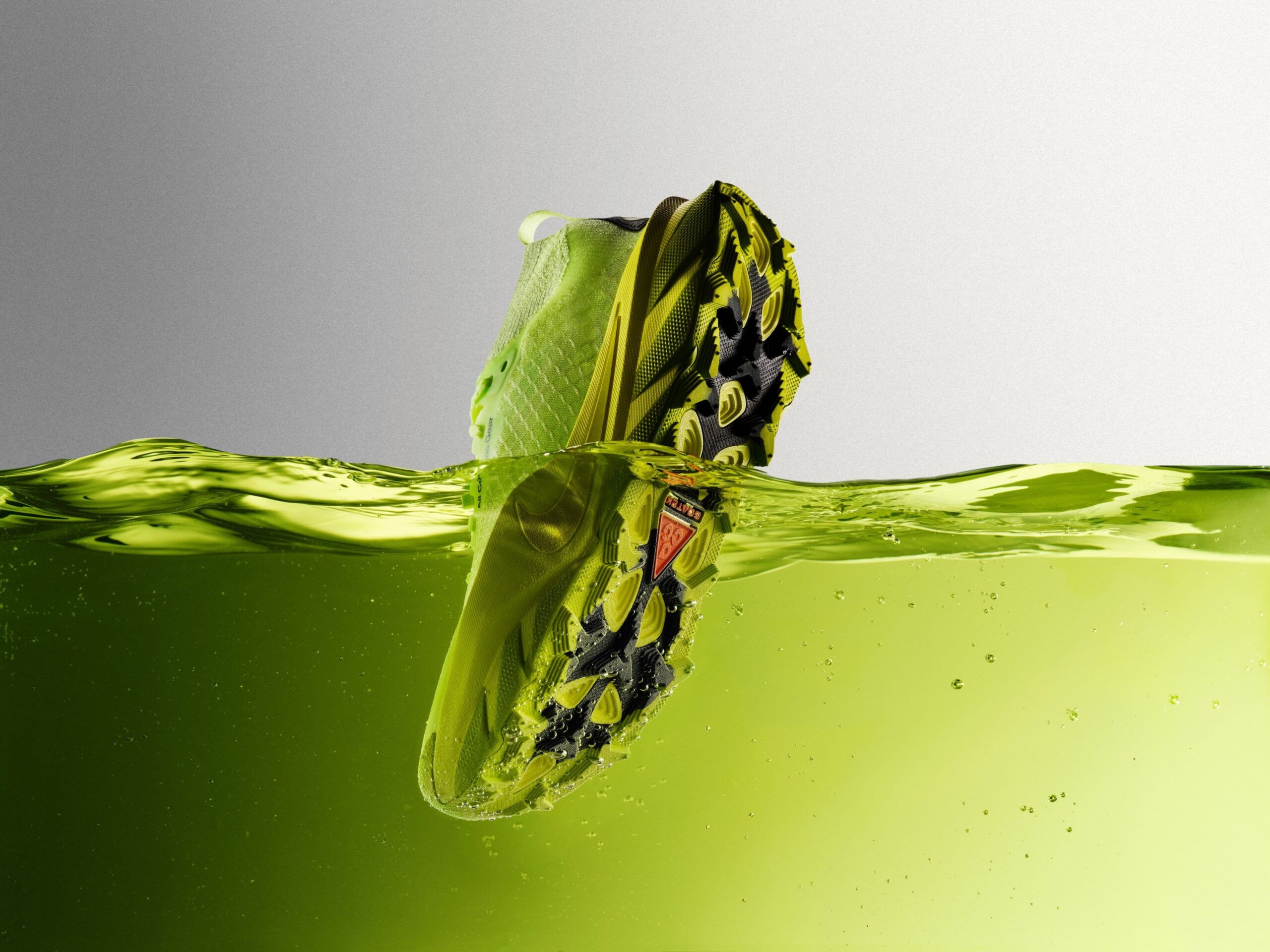
The name is a joke that endurance runners will get immediately
Picklejus is named after pickle juice, the near-mythical cramp remedy that gets passed around aid stations and argued about in ultrarunning forums. Nobody fully agrees on why it works. Plenty of people swear it does. Naming a pinnacle performance shoe after a folk remedy is a small piece of insider signaling, and it tells you who ACG built this for. Not the person browsing a wall at a mall. The person who has stood at mile 78 with a seizing calf and drunk something out of a jar.
Three years of conversations in Chamonix
The project started with a question about Mont Blanc. How do you help an athlete conserve energy climbing, absorb load descending, and keep confidence underfoot across 100 miles of terrain that changes every twenty minutes?
ACG went to Chamonix, the center of gravity for big-mountain racing, and spent three years talking to the athletes who actually run it. Three needs kept surfacing. Efficiency on long fatiguing climbs. Protection through the descents, which is where the damage accumulates. And traction confidence, because a runner who does not trust the ground slows down whether they mean to or not.
The response was not to optimize for one of the three. Ten research studies, twenty prototypes and more than one hundred athletes went into the version that got announced.
“The driving element behind Picklejus was no compromises,” said Emily Farina, Senior Principal, Running Footwear at the Nike Sport Research Lab. “Validating a shoe that could solve for uphill and downhill savings over extended terrains needed a strong partnership between the NSRL, product-creation teams and our ACG athletes. The footwear design breaks convention for what delivers efficiency, protection or stability.”
A foam platform that does the job a plate usually does
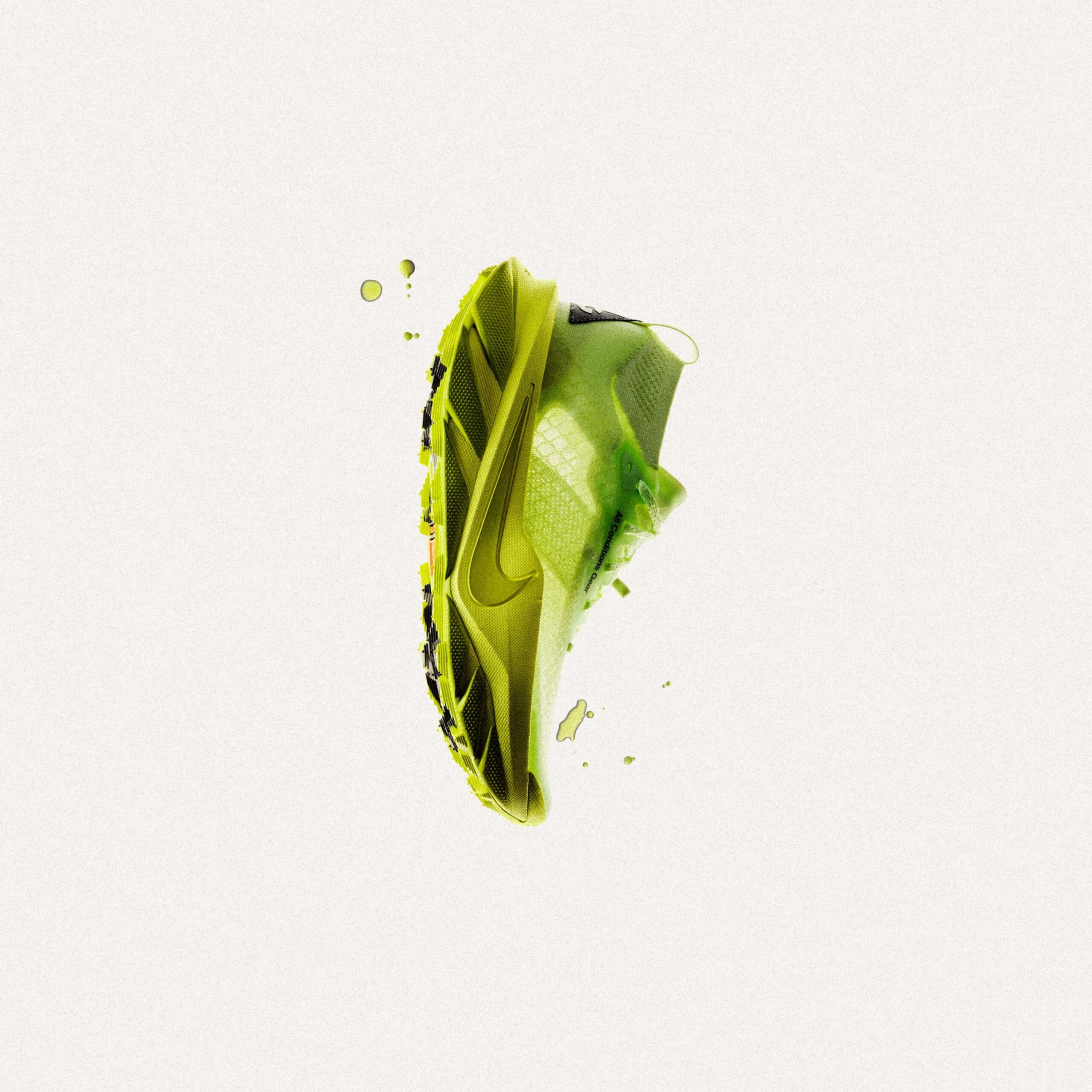
The technical headline is the midsole. Picklejus uses two ZoomX compounds in what Nike calls its first co-molded, dual-density supercritical foam platform built specifically for trail.
A soft ZoomX core sits in the center for cushioning and load protection. A firmer ZoomX ring runs the perimeter and provides what Nike describes as a plate-like effect, meaning stability and support without a rigid carbon plate underfoot. That distinction matters on trail. A stiff plate is excellent on a flat road and can feel unpredictable on uneven rock, where the shoe needs to deform around what it lands on. Co-molding the two densities lets them behave as one piece rather than as stacked layers that eventually separate.
Whether it delivers is a question for the athletes who get it under them. But the approach is the interesting part. Most of the trail category over the last five years has been an arms race of stack height and plates borrowed from road racing. This is a different answer to the same problem.
Flyknit that repels water and a cuff that keeps rocks out
The upper is trail-tuned Flyknit with knit containment cables that adapt around the foot. Nike built it with hydrophobic yarns, which is a practical call rather than a marketing one. A knit upper that absorbs water gets heavy, stays heavy, and starts causing problems on a long day. Repelling water keeps the weight closer to where it started.
There is also a gaiter-inspired cuff, which handles the least glamorous and most universally hated part of trail running. Debris in the shoe. Every runner who has stopped on a climb to shake a pebble out understands why that made the spec sheet.
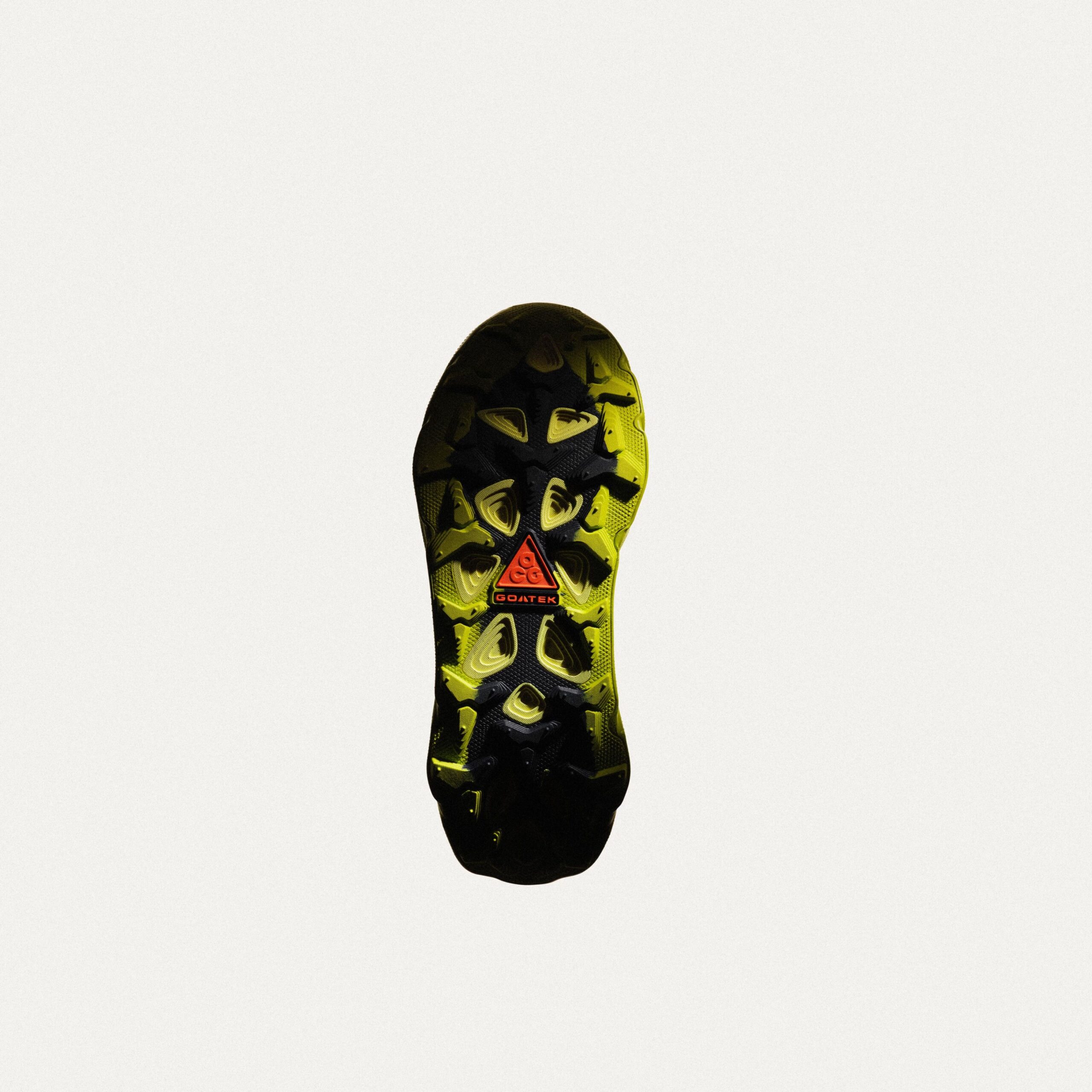
GOATEK and the numbers behind it
The outsole is GOATEK, ACG’s proprietary traction platform, and it is the piece with hard figures attached. Nike claims a 45 percent increase in wet traction and 25 percent greater abrasion resistance compared to its previous all-terrain outsoles.
Those numbers came out of five rounds of long-term wear testing with athletes logging more than 18,000 test miles. Nike says testers reported meaningful gains over previous ACG traction systems, with wet-weather performance standing out against competitor benchmarks.
The company is also clear that GOATEK is not meant to stay on the trail. ACG is being positioned as the proving ground, with the traction work expected to inform performance footwear across the wider business. That is a familiar Nike pattern. Test it in the hardest conditions, then move it downstream.
The wait is the strange part
ACG Picklejus arrives in late 2027 at nike.com and select retailers. Announcing a shoe more than a year ahead of availability is unusual, and it says something about how Nike is treating this one. It is being framed as an innovation story first and a product release second, which buys time to build the GOATEK name before anything with that outsole reaches a shelf.
No price has been announced. Given the construction and the pinnacle positioning, expect it to land at the top of the trail category rather than in the middle of it.
For anyone tracking where ACG goes next, this is the clearest signal in years that Nike intends to compete seriously in big-mountain running rather than treat the outdoors as a lifestyle aesthetic. The athletes in Chamonix asked for something. This is the answer they got.
Source: Nike newsroom
-->