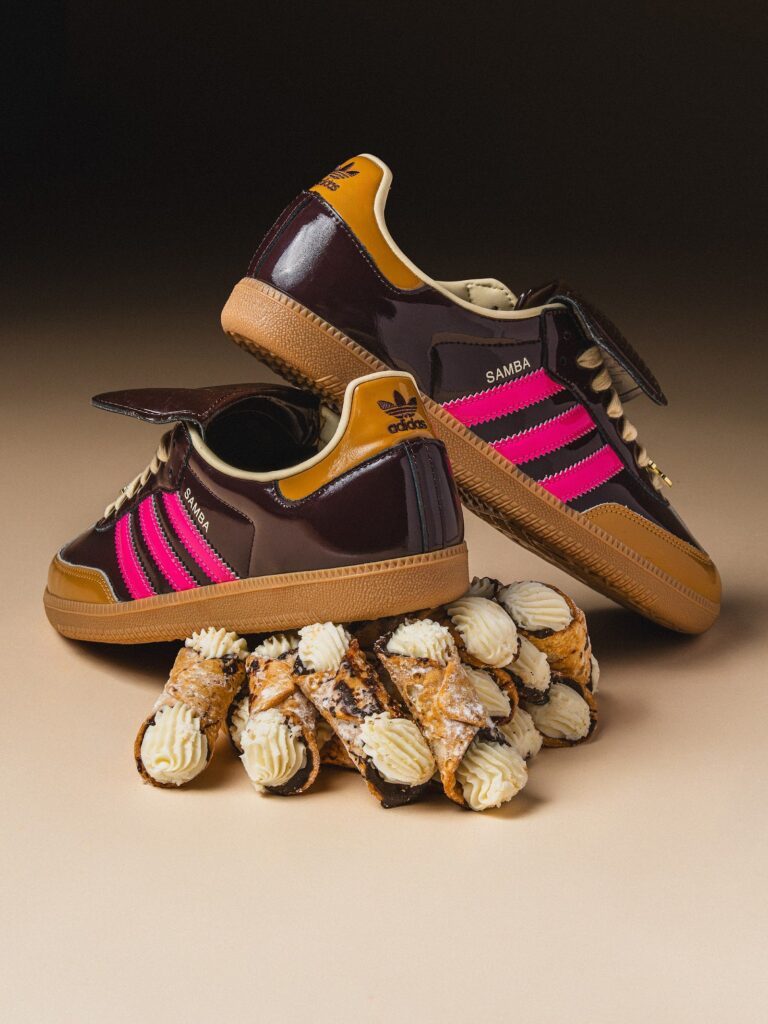
Asphalt has spent eight years selling other people’s sneakers in New York. On September 25 the Staten Island retailer puts out one of its own, an adidas Samba built around the cannoli, with a removable charm hanging off the laces and three Velcro tongues in the box. Six hundred pairs exist. Every one of them is individually numbered, 1 through 600, which is the detail that tells you what this collaboration is actually for.
The Samba is the oldest shoe adidas still sells in volume, and it got there by being plain. adidas traces the roots to 1950, when the company built a shoe for German footballers playing on frozen and snow-covered pitches, and dates the Originals Samba as most people know it to 1972. It was an indoor football trainer first. That is why the last sits so flat, why the toe box is so low, and why the outsole is thin enough to feel the floor through. None of the original design was drawn to be looked at off a pitch.
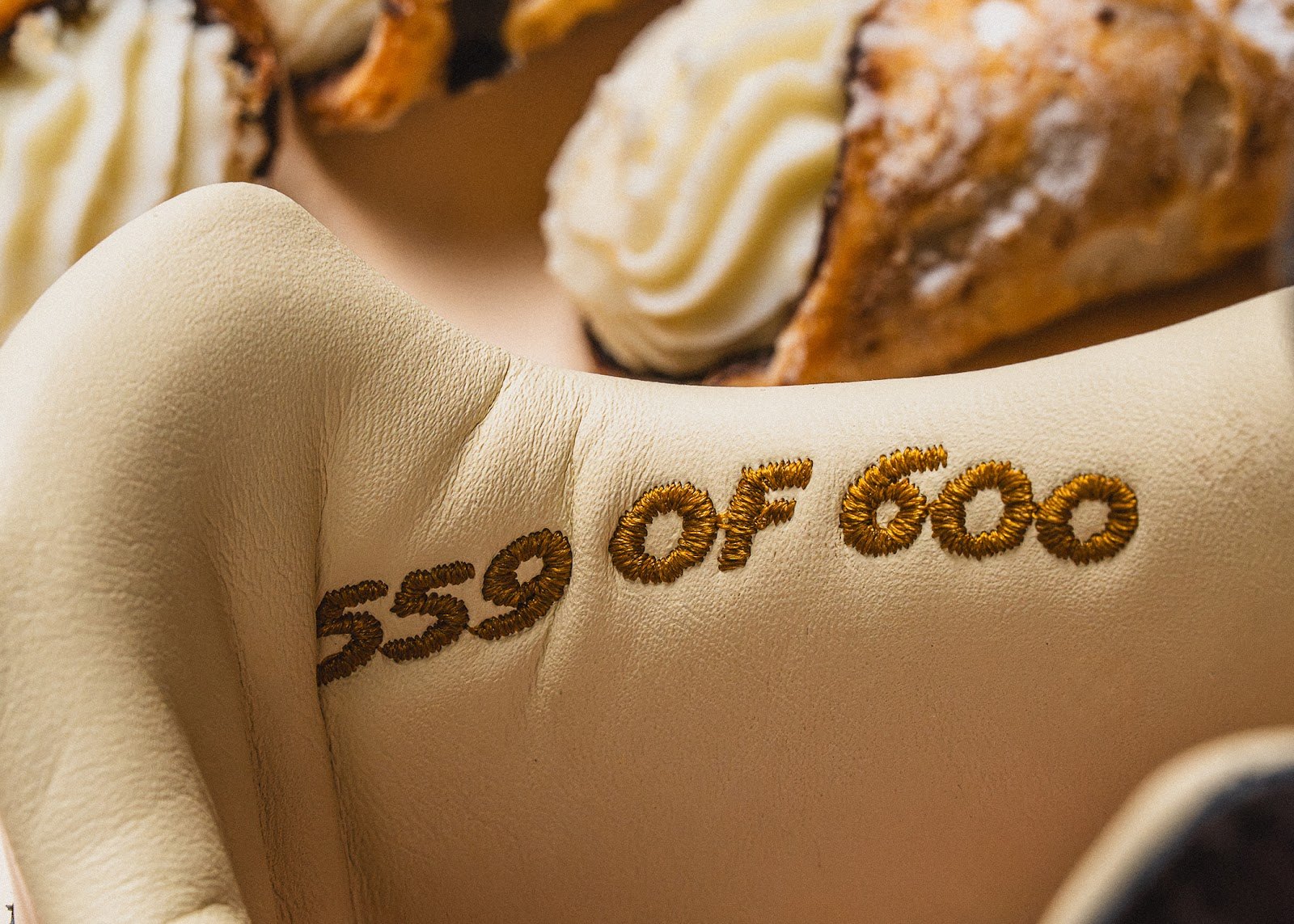
Everything that has happened to the Samba since follows from that restraint. The shoe is a blank, and blanks are what collaborators want, which is how adidas ended up leaning on it as hard as it has over the last three years. The complaint about the Samba stopped being that it is boring a while ago. The complaint now is that it is everywhere. Handing one to a seven-door New York retailer and capping the run at 600 is a reasonable answer to that, and it is the same instinct behind the 400-pair Climacool Futurecool earlier this year.
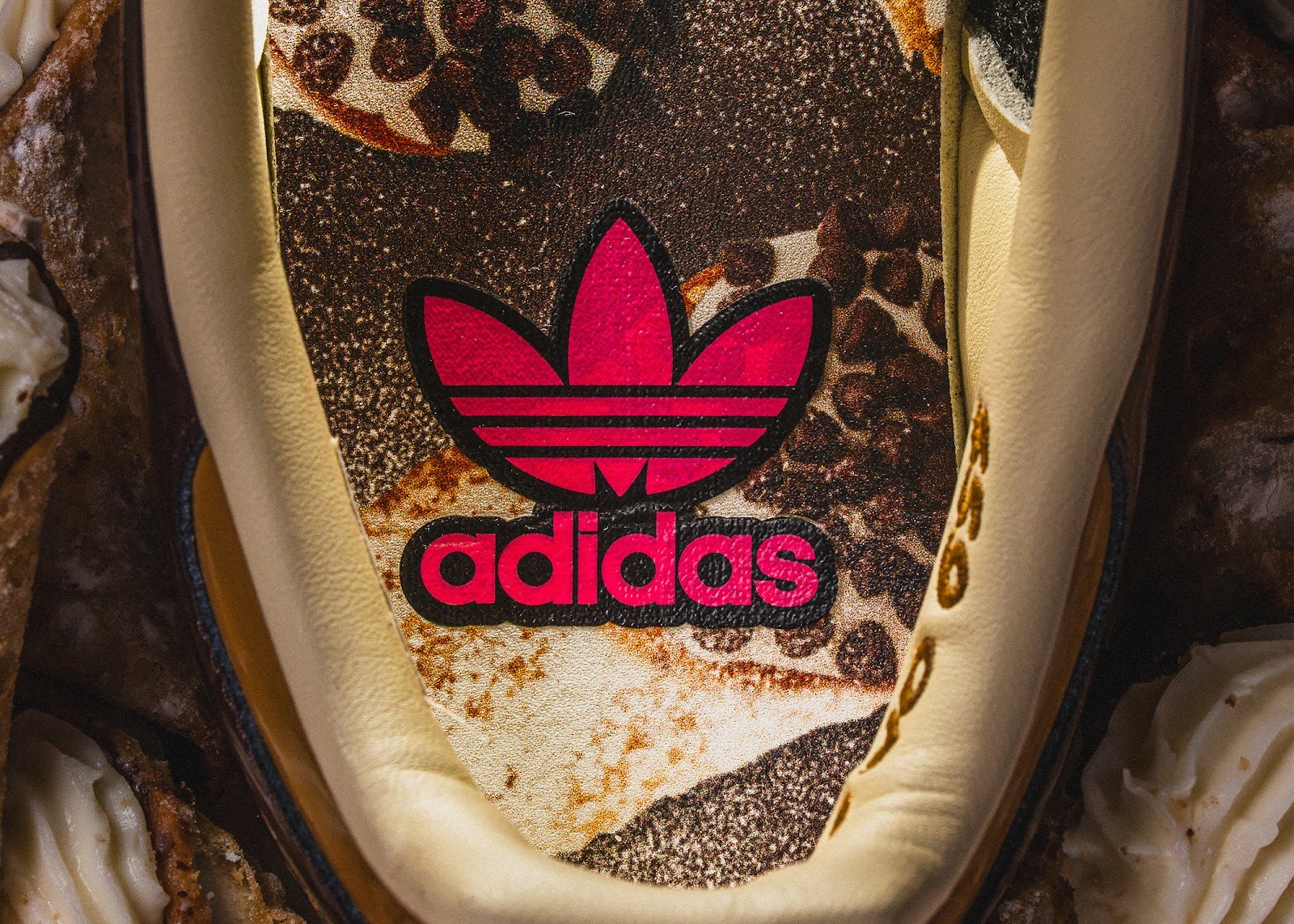
The colorway reads as bakery without dressing up as one. Warm wheat tones carry the cannoli shell, deep chocolate details sit in for chocolate chips, and hits of pink pull from the pastry counters themselves. A removable cannoli charm hangs off the shoe and an illustrated cannoli footbed continues the joke where only the wearer sees it. The construction is the surprise. The Samba ships with three interchangeable Velcro tongue options, each keyed to a color found elsewhere on the upper, plus the option to pull the tongue out entirely. Three lace sets come in the box on top of that. adidas has built modular sneakers before and mostly on silhouettes with room to spare. Doing it on a Samba, a shoe whose whole appeal is a low clean profile, is the harder version of the idea.
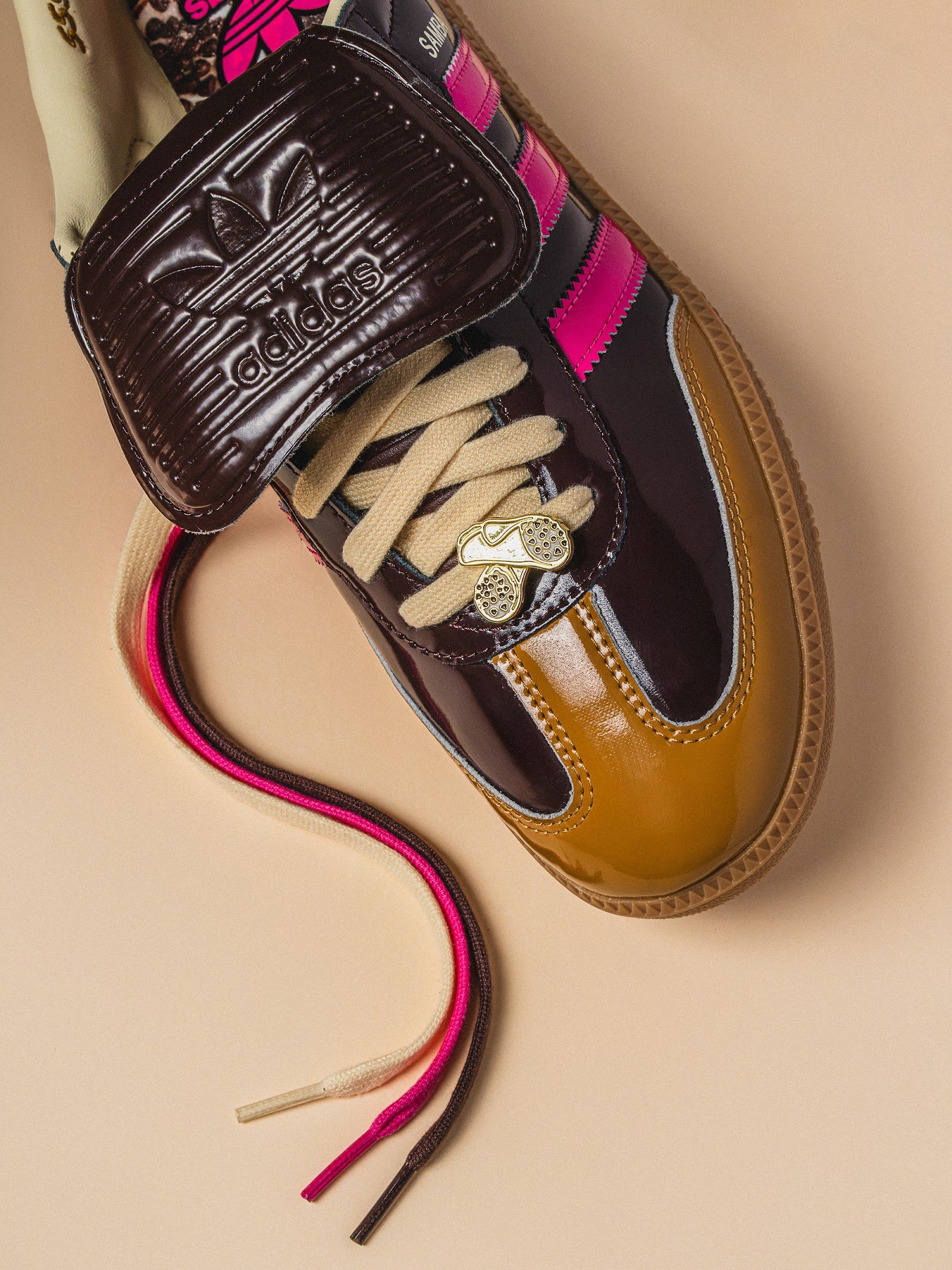
Whether it works comes down to the tongueless setting. Strip the tongue off a Samba and you are left with something closer to a slipper with a three-stripe cage, and that is either the most interesting thing here or the reason the swap kit stays in the box. Asphalt clearly expects the former. Jadah Orilus, the retailer’s operations manager and buyer, framed the shoe around what people grow up seeing every day, and a modular upper is a literal way to hand that back to the customer. It also says something about where adidas thinks the Samba goes next. A silhouette this saturated has two exits, retirement or reinvention, and reinvention on a shoe with almost no surface area to work with means changing how it is put together rather than what it is made of. The Handball Spezial work with Politics came at the same problem from the other direction, through material rather than hardware.
The pair asks $130. A standard Samba OG lists at $100 on adidas.com, so the premium here is $30 for the charm, two spare tongues, two spare lace sets and a number on the shoe. That is a fair trade on paper, and the numbering is doing more work than it looks like. Six hundred pairs sold through one retailer’s seven doors and one website is a small enough run that the secondary market will find it quickly, and an individually numbered pair carries a provenance a general release never will. becausesneakers is not putting a resale figure on it before the shoe exists.
The adidas x Asphalt Samba releases September 25 at 10 AM EST, at all seven Asphalt retail locations and online, priced at $130 in sizes 4 to 13 including half sizes. Six hundred numbered pairs, and adidas has not published a style code for it.
-->