Nike spent most of its November 16 innovation showcase talking about platforms, and the one that changed shape most is the quietest of them. Nike Mind went from a single shoe to five, and the thing separating one from another is not the silhouette, the upper or the use case. It is whether the foam nodes under your foot are joined together or left to move on their own.
That is a strange way to build a product line, and it is the most interesting decision in the announcement.
Where Mind came from
The Nike Mind 001 arrived as a one-off: a shoe whose entire argument lived in 22 foam nodes set under the footbed, meant to wake up the sole of the foot rather than cushion it. It was a sensory product sold on feel, not on cushioning numbers or weight. This site has covered the line twice since, including the Mind 002 Flyknit and the 002 in Pink Smoke, both of which carried the same 22-node count.
Nike’s new release tells the story differently. It describes Mind as something that “started as a single footwear expression, the Nike Mind 001,” and then jumps straight to the four styles coming in 2027. The 002 does not appear in the text at all. That is worth noting rather than smoothing over, because the brand is now narrating a platform history that skips a shoe it sold.
The split is underfoot
Four new Mind footwear styles debut in 2027: the Nike Mind Sock, the Nike Mind Sneaker, the Nike Mind Slip and the Nike Mind Moc Flyknit. Nike sorts them into two groups, and the sorting is purely mechanical.
The Mind 001 and the new Mind Sock keep “the original construction of 22 individual moving nodes” and deliver what Nike calls the most intense underfoot sensation. Nike positions that pair for game-day preparation, meaning short, deliberate wear before something happens.
The Mind Sneaker, Mind Slip and Mind Moc Flyknit use a new secondary construction that “bridges the 22 foam nodes together,” producing a softer sensation. Those three are built for all-day wear.
So a shopper picking between a sock and a slip-on is not choosing a format. They are choosing an intensity, and the format follows. Nike has built a dial into a shoe line and labelled the positions with silhouettes.
You can see it in Nike’s own photograph
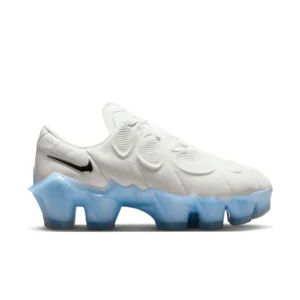
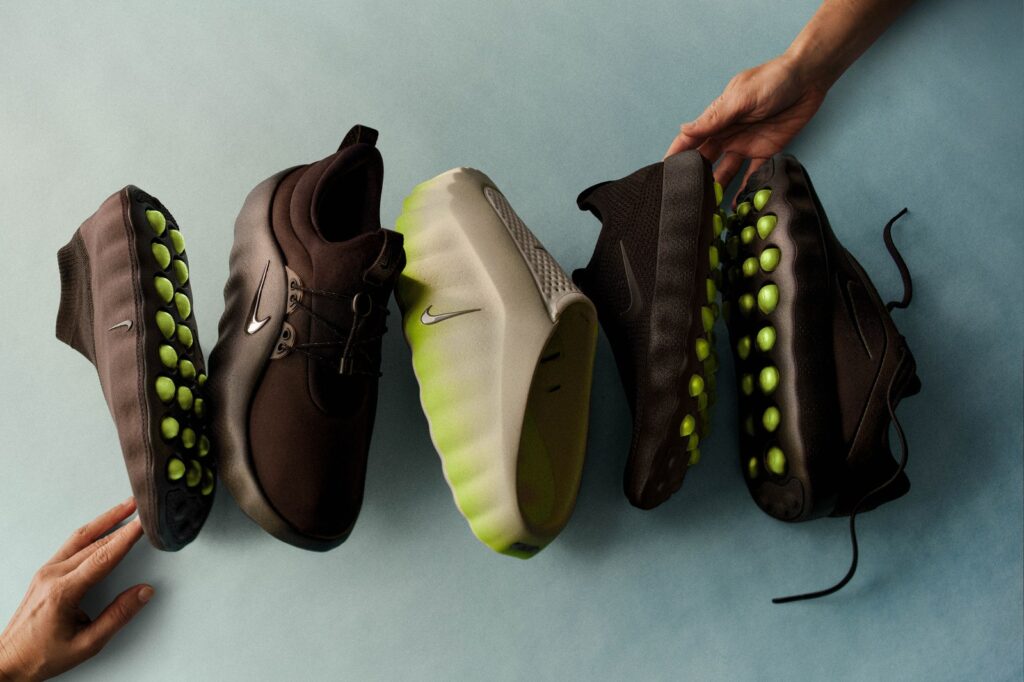
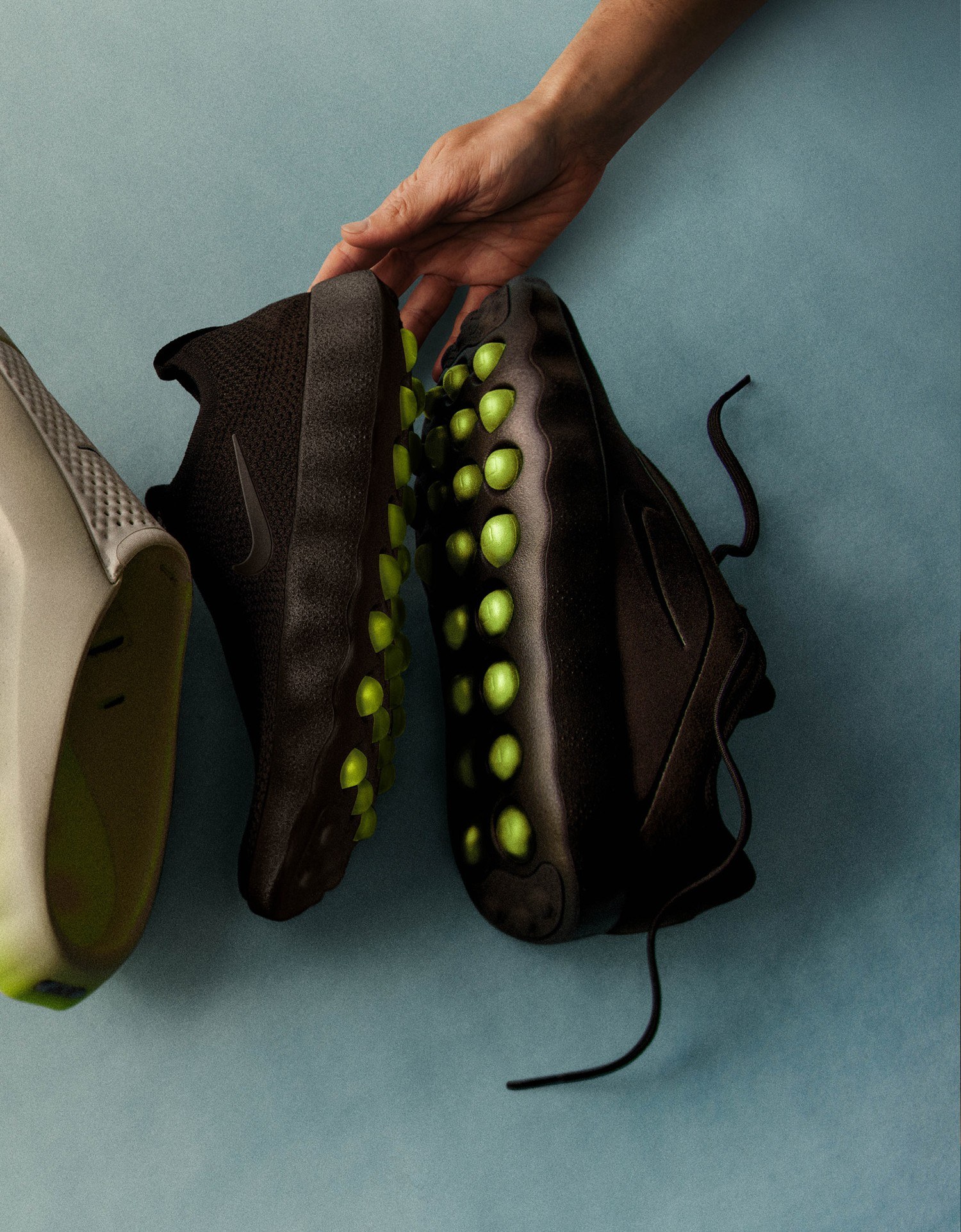
The press image does the explaining better than the copy does. Five pieces are laid out together, and turned so that several show their soles. One outsole carries large volt nodes standing apart from each other with clear gaps between them, in two long columns running heel to toe. Another shows the same volt material flattened into a continuous, undulating ridge with only shallow breaks. A third shows a sole edge where the volt has gone almost smooth.
Nike did not caption the photograph, so which piece is the Sock and which is the Slip is unconfirmed. The construction difference, though, is visible without being told, which is unusual for a sensory claim. Most of what brands say about feel cannot be photographed. This can.
Why the number survived, and why that matters
The detail doing the most work is that 22 did not change. If the nodes are now bridged into one another on three of the five styles, 22 has stopped being a mechanical requirement and become a signature. Nike kept the count when it changed the thing the count was describing.
That tells you Mind is being managed as a brand rather than as an experiment. The 22 is now what a Swoosh is on a Free or what a visible window is on an Air Max: the thing that makes the shoe legible as part of a family, whether or not it is still doing the original job.
The surrounding structure says the same. Nike filed Mind under a new performance category called Prime, one of two categories it created on November 16, the other being Recover. Prime is for getting ready and Recover is for going again, and both sit alongside Train in the system Nike is calling Prime, Train, Recover. Nike is arguing that warming up and recovering are places to sell product, not just moments in a day. Mind is the first proof it intends to build that way.
What it will cost, and when
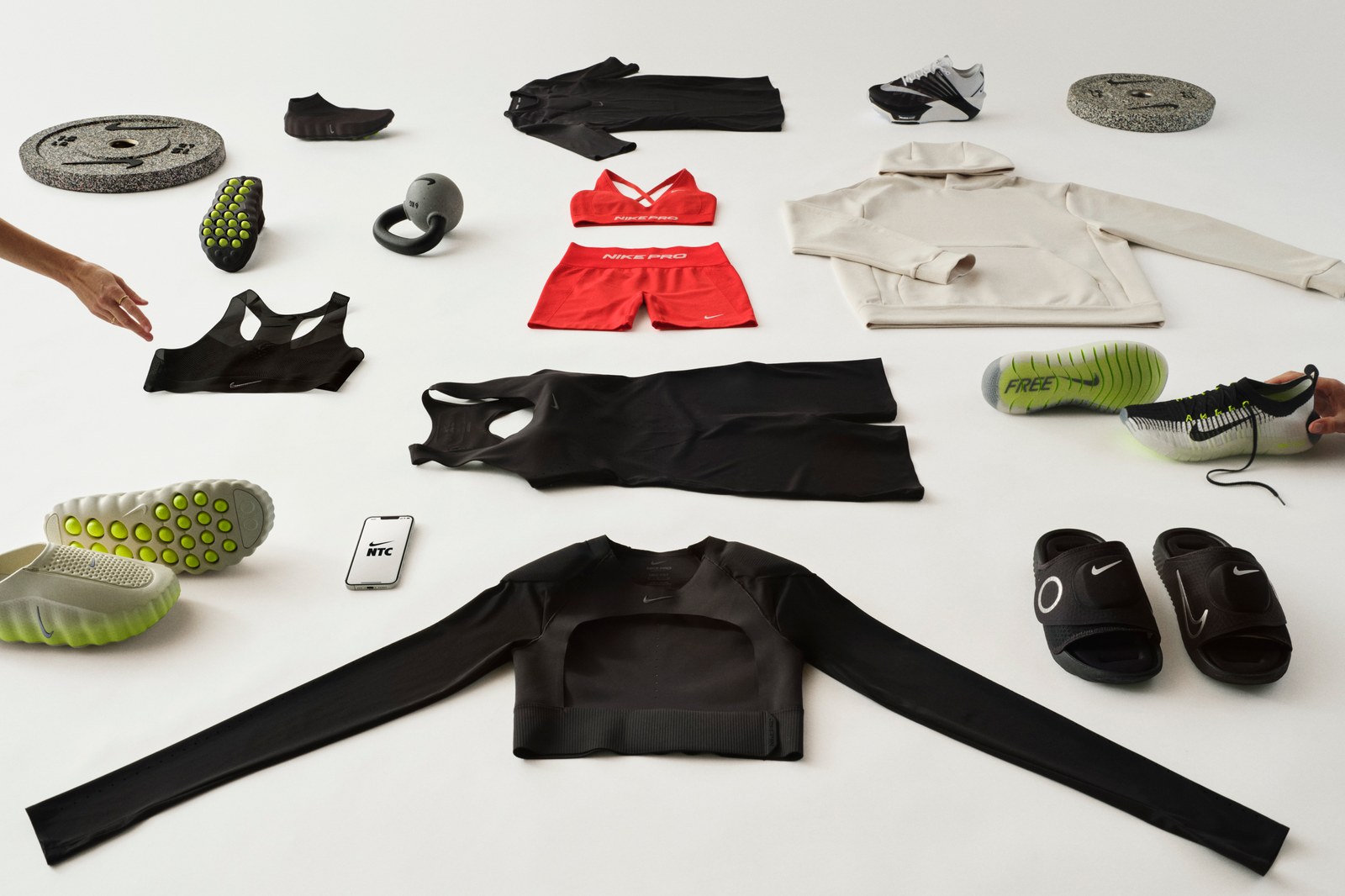
Nike published no price for any of the four, and no month. The only dated item anywhere in the Training announcement is the Nike Pro apparel suite, set for January 2027. The Mind 001 gives some sense of where the line has sat before, but a knit sock and a Flyknit moc are different builds at different costs, and nothing in Nike’s material supports putting a figure on either.
Release details
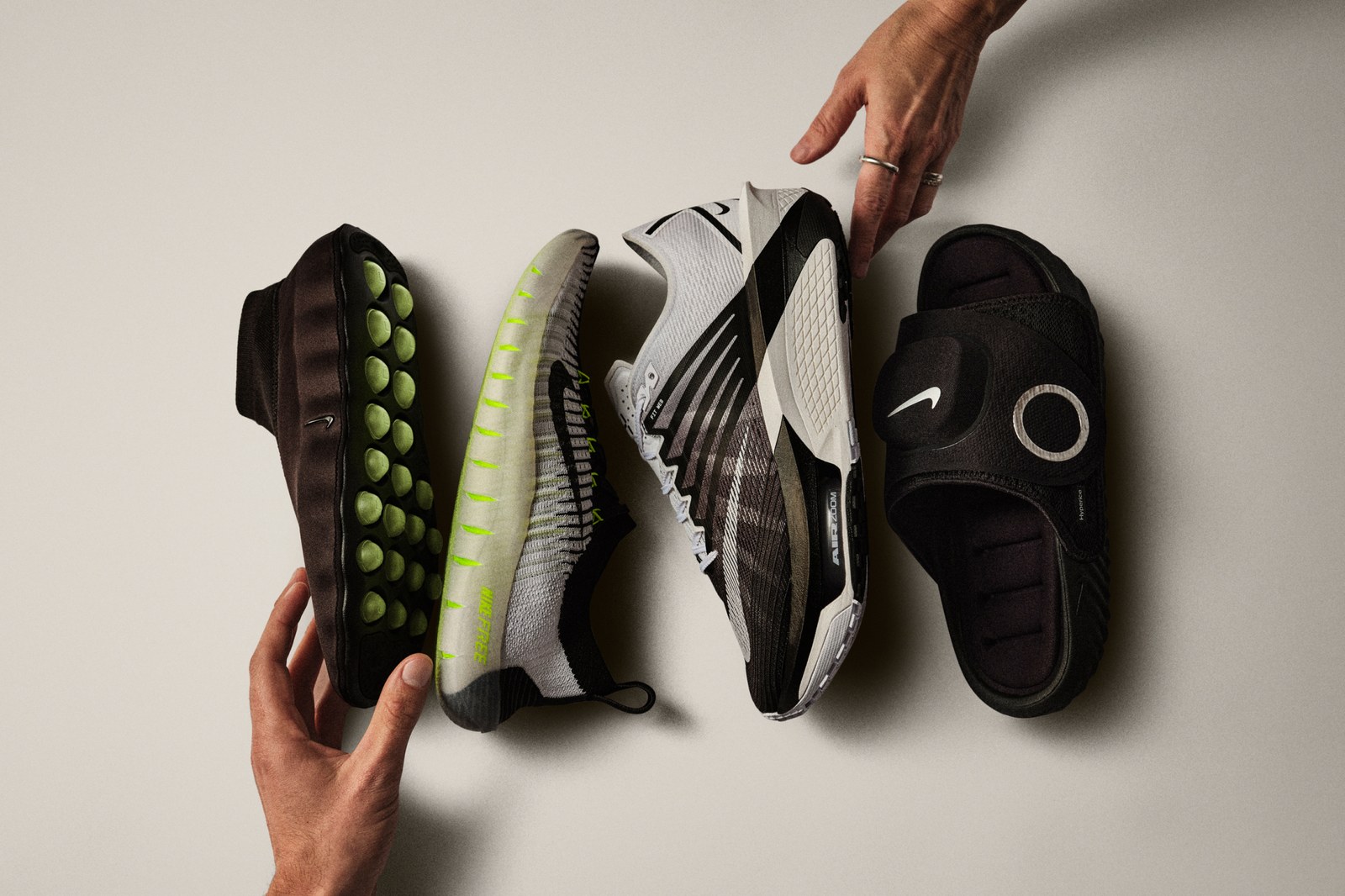
The Nike Mind Sock, Nike Mind Sneaker, Nike Mind Slip and Nike Mind Moc Flyknit are all scheduled for 2027. No style codes, no release dates and no retailer list have been published. All four were shown on November 16 at Nike’s World of Athletes event in Beaverton, alongside the returning Nike Free, Tuned Air and the Project Ride and Morpho X silhouettes from Nike Sportswear.
-->