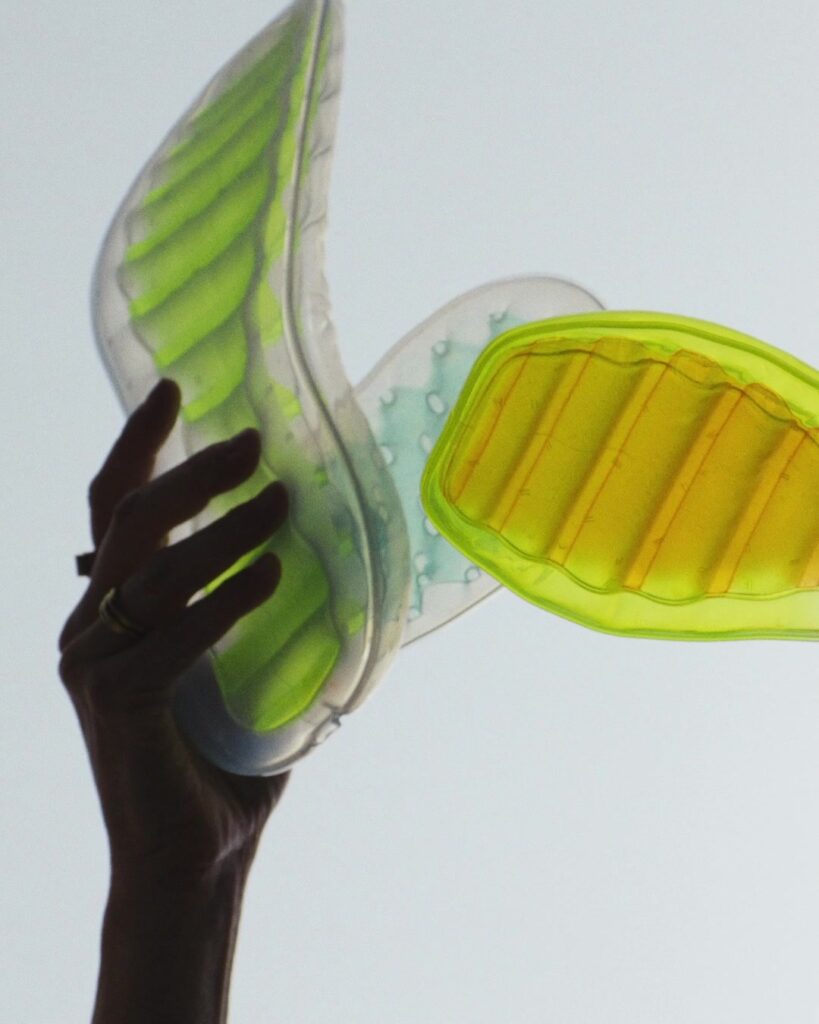
Nike announced a new way of making Air on November 16, and what it announced is not a shoe. Tuned Air is a manufacturing process, shown as a set of transparent bladders with coloured geometry printed inside them, and the first pair built on it does not reach runners until late 2027. The press material is unusually specific about how the process works, which is what makes it worth reading closely rather than filing under innovation theater.
Nike Air is close to fifty years old and it has never been one thing. The company’s own release describes a genealogy rather than a product, with Zoom Air set up for responsiveness and Air Max set up for comfort, each unit carrying its own look, feel and set of attributes. What held that genealogy together was a shared constraint. Air units took their shape from pins and rigid internal zones, physical structures placed inside the bag that told the air where it could and could not go. Those structures worked, and they also set the ceiling. Unit height was a mechanical problem, and every new geometry meant new tooling.
Tuned Air removes the pins. Nike says its engineers print a proprietary digital ink inside the unit and then run a selective lamination step, and the rule is simple enough to state in a line. Everywhere there is ink in the core, the core will not bond to the unit. Everywhere there is no ink, it bonds. The internal architecture of an Air bag becomes a print file. The press assets show what that produces: transparent full-length units with chevron pleats and stacked bands glowing in pink, orange, green and cyan, several of them mounted on a wall together in different shapes and textures. Nike says the height constraint disappears along with the pins, and that the idea came from studying how digital inks render colour on magazine covers.
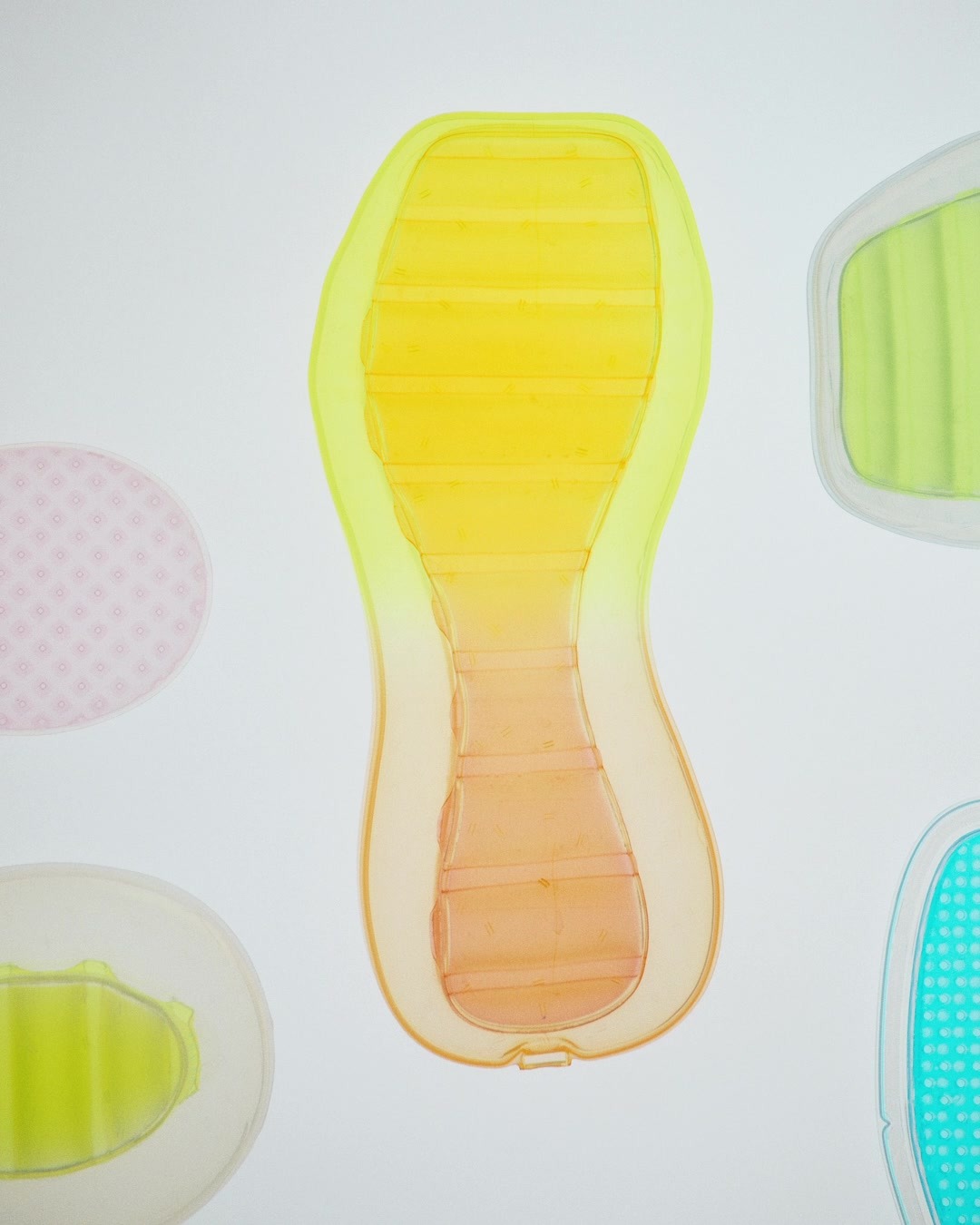
The number Nike leads with is not a cushioning figure. It is seventy percent, the drop in average development time for a new Air unit at the company’s Advanced Product Creation Center, and three days instead of three weeks for a prototype. That is a tooling story told as an innovation story, and it is the honest version of what happened. Phil McCartney, Nike’s chief innovation, design and product officer, frames the gain as speed and precision rather than as a new sensation underfoot. A company that can iterate an Air unit in three days can put more variants in front of athletes per season, which is a supply chain advantage before it is a product one, and Nike said it in the same week it was talking to investors.
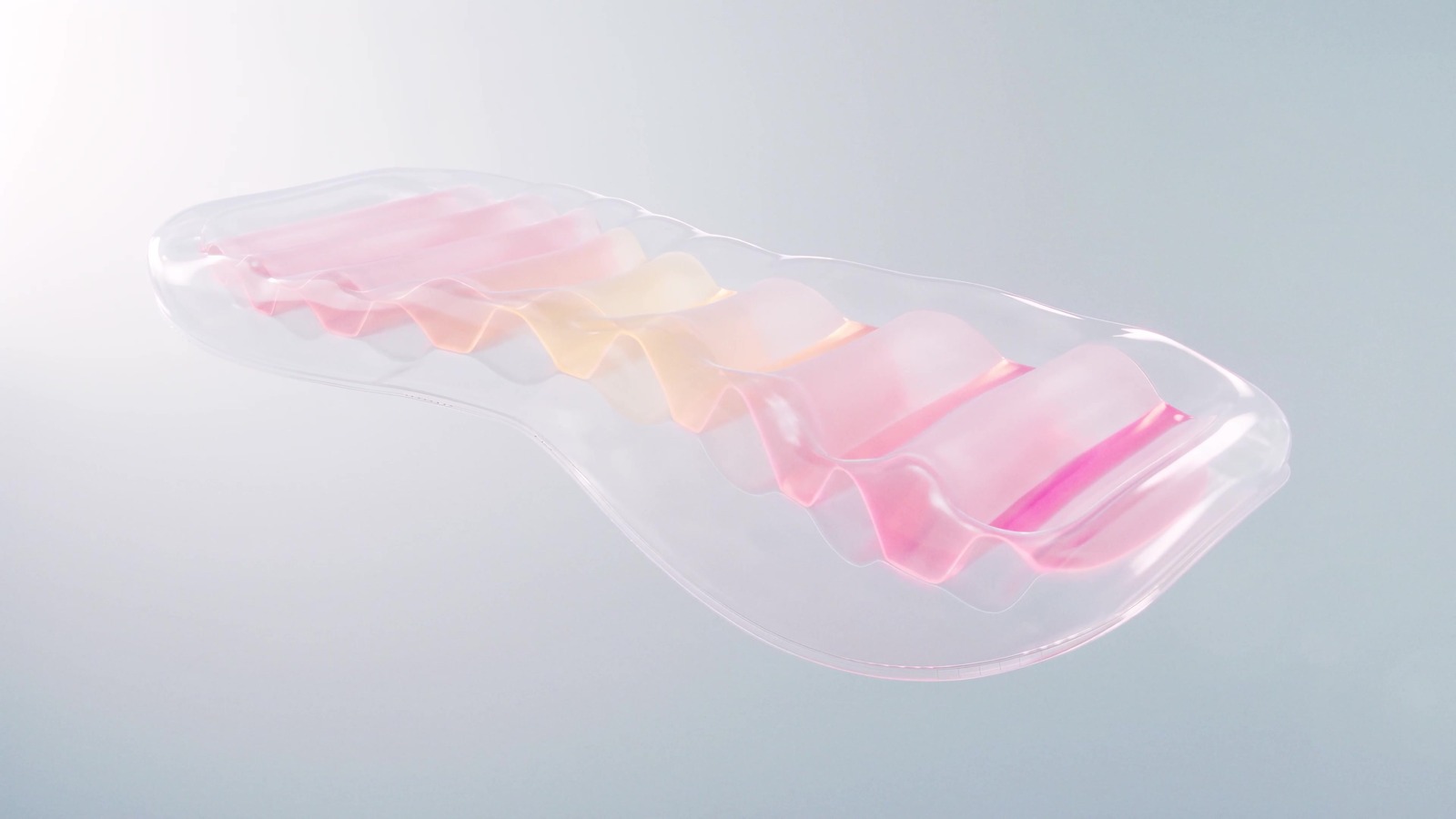
Then there is the name. Tuned Air is not new vocabulary at Nike. The sneaker press has attached it for years to the cushioning in the Air Max Plus, which Complex dates to October 1998 and credits to designer Sean McDowell. What that system did is the part that matters here. Complex describes a Tuned Air heel unit built with pre-molded polymer hemispheres, a crash pad and a guidance chamber. Sneaker Freaker describes a blow-moulded unit paired with rubber hemispheres placed in the sole to provide support. The two accounts disagree on the material and on exactly where the hemispheres sat, and Nike has never settled it in public. They agree on the principle. The 1998 version tuned Air by putting hard objects inside the sole.
Which makes the reuse close to an inversion. The old Tuned Air added rigid structures to shape how the air behaved. The new Tuned Air exists to take rigid structures out, and Nike’s release says as much, that liberating those internal structures gives athletes purer and less restricted units. Same two words, opposite method, twenty-eight years apart, and the release does not mention the Air Max Plus once. That is either a company confident nobody will check the archive, or a quiet argument that the first attempt was the right idea with the wrong tools. Either reading is more interesting than the one the release offers.
There is no price attached and no style code, because there is no shoe yet. Tuned Air reaches runners in late 2027, which Nike calls the beginning of a broader platform across sport and Sportswear. That puts it behind most of what Nike showed at the same event, with the Morpho X arriving in 2027 and Project Ride in 2028, and alongside the four Nike Mind styles dated to 2027. An Air platform with a longer runway than the footwear announced beside it is a fair measure of how much of the factory has to change first.
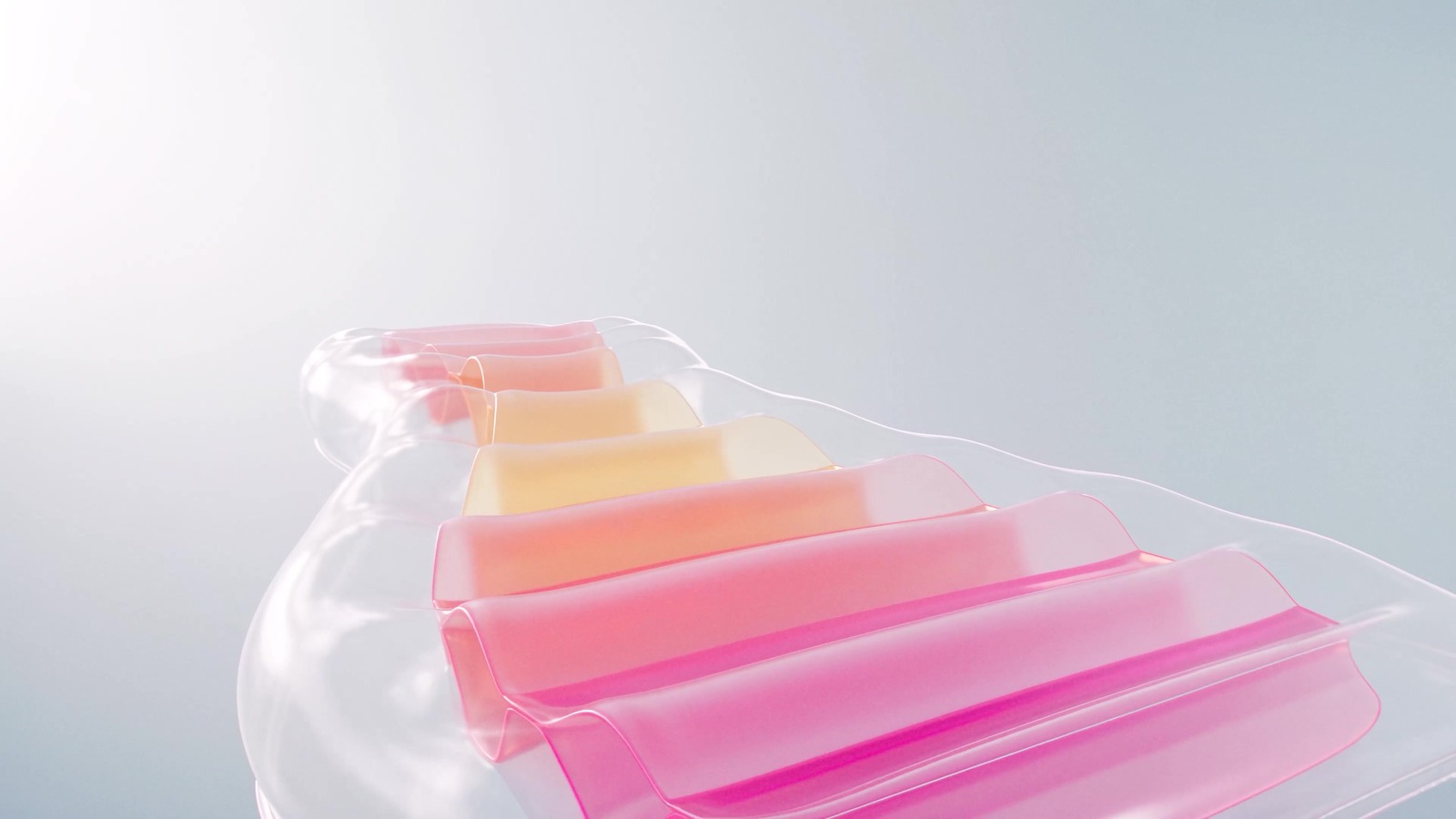
Nike published the Tuned Air explainer on November 16, 2026 as part of its World of Athletes showcase, the same slate that produced the returning Free 3.0 and 5.0. No colorways, style codes or prices have been announced, and the company has not named the shoe that carries it first. The full explainer is on Nike’s newsroom.
-->