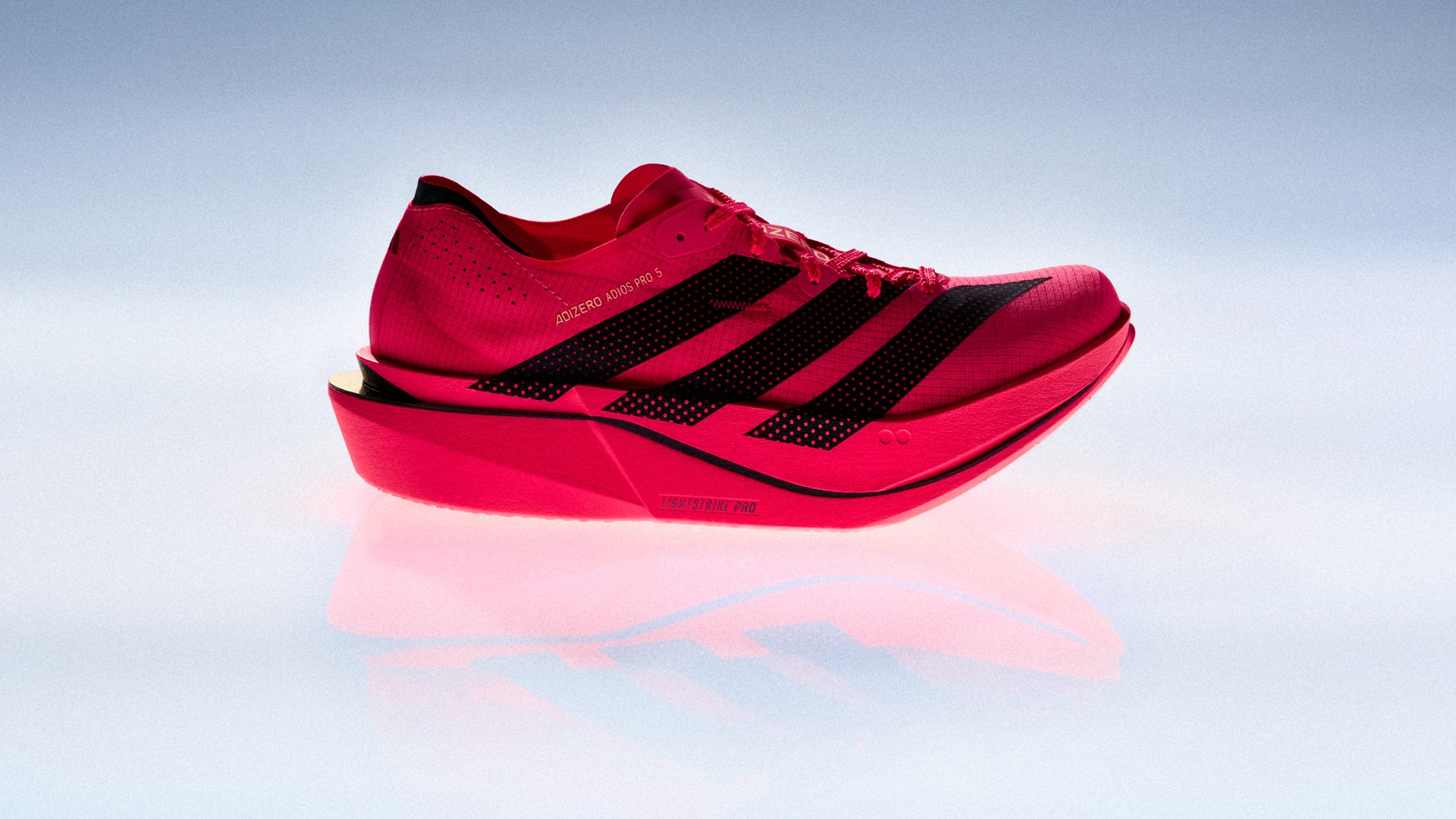
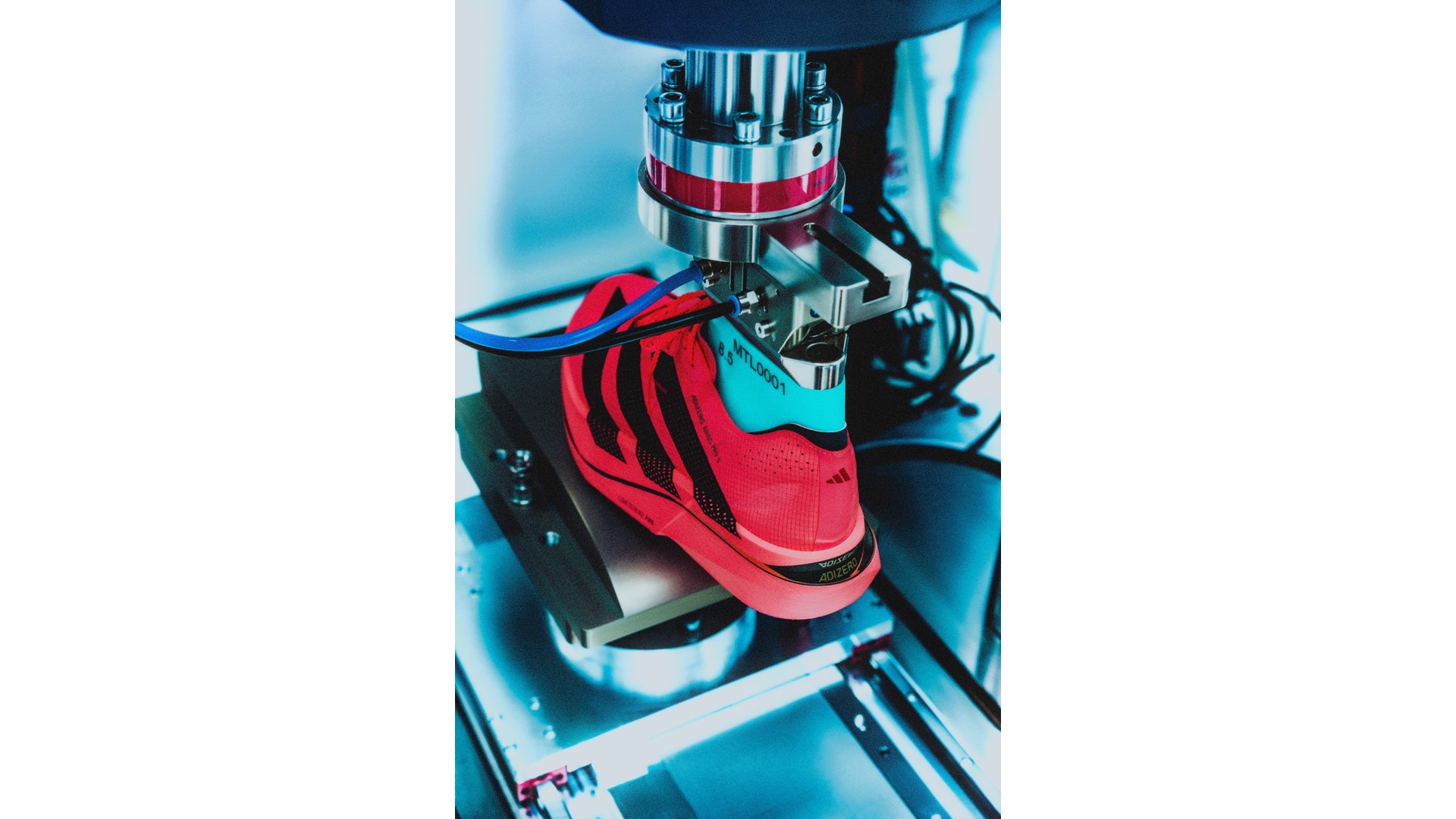
adidas put the Adizero Adios Pro 5 on sale globally today, and the headline is not the weight. It is the subtraction. Energyrods, the carbon stems adidas has threaded through its race-day midsoles since 2020, are gone from the Pro series. What replaces them is Energyrim, a carbon-infused structure that runs around the outside of the midsole rather than through the middle of it, visible along the sidewall and picked out by a reflective zone at the heel.
The Adios name is the oldest thing adidas owns in marathon racing. The Adizero Adios began as a thin racing flat, and it has a claim on the record book that no other shoe line can match. Haile Gebrselassie ran 2:03:59 in Berlin in 2008 to take the world record by 29 seconds wearing a pair. Patrick Makau took another 21 seconds off three years later. Dennis Kimetto ran the Adizero Adios Boost in 2014 and cut 41 seconds more. For most of that run the shoe was defined by what it left out, a low stack and very little underfoot.
The Pro changed the terms in 2020. It arrived with Lightstrike Pro foam and Energyrods, adidas’s answer to the single carbon plate Nike had already made the category standard, five rods laid out to follow the metatarsals instead of one flat sheet. Every Pro since has been an argument about how to arrange carbon inside foam. The Pro 5 is the first one to move the carbon outside it.
What the Pro 5 is borrowing from is the Adizero Adios Pro Evo 3, the stripped-down racer adidas built for elite fields. Energyrim comes out of that project. Because the carbon sits around the perimeter, adidas can pack more Lightstrike Pro directly under the foot instead of routing rods through it, and it can tune stiffness by shaping the rim rather than by adding material. The brand claims a 9 percent lift in energy return over the Adizero Adios Pro 4.
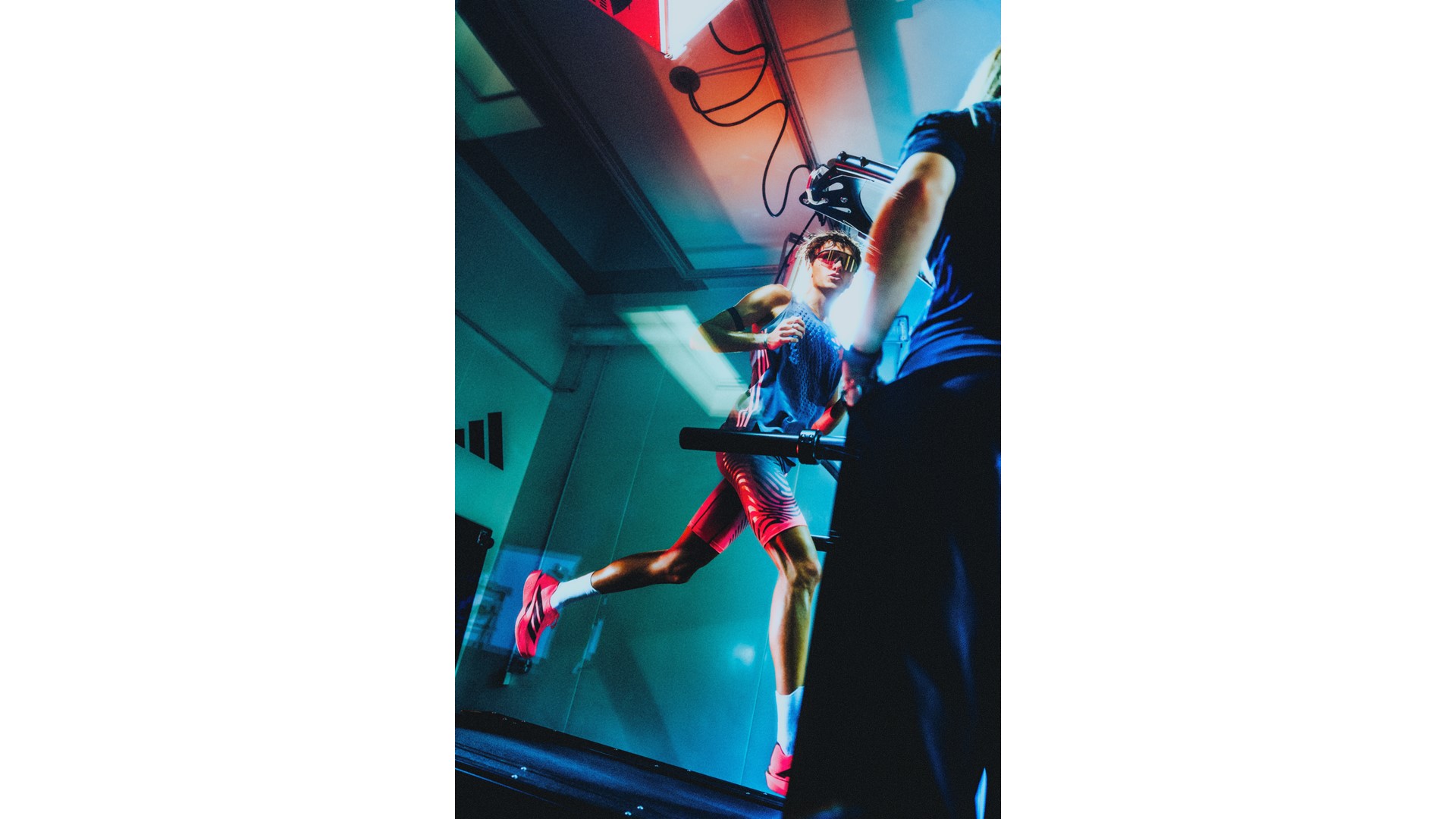
Weight went the other way. adidas puts a UK 8.5 sample at 177 grams, roughly 23 grams and 12 percent under the Pro 4. Underneath, a new outsole pairs the brand’s Lighttraxion layout with Continental rubber, which is what adidas reaches for when it wants grip without full-coverage weight. The upper, called Lightlock 2.0, adds ventilation zones, internal support bands and a rebuilt heel. Stack measures 39 millimeters at the heel and 35 at the forefoot, a 4 millimeter drop.
The question worth asking is who this shoe is for. adidas spent several seasons letting the Evo line chase records while the Pro line carried the volume, and the distance between them was the point. Evo was the halo, made in small numbers at a price most runners were never going to pay. Pro was the one you could find in your size. Pushing Energyrim down into the Pro series closes that gap deliberately, and it lands in the same month Nike moved the Alphafly 4 out early and watched it sell through in a day. The category has stopped being an argument about plates and turned into an argument about how much foam you can get under the foot, which is the same ground On is fighting on with Surreal in the Cloudsurfer 3. adidas’s answer is that carbon’s job is to hold the foam, not to live inside it.
Retail is $275. That puts the Adizero Adios Pro 5 just under the $280 Nike is asking for the Alphafly 4, and well above where adidas used to position the Pro against its own halo shoes. The Agravic Speed Ultra Evo carried the same road-supershoe logic onto a trail last month, so this is a pattern rather than a one-off. The Pro series used to be where adidas made race-day thinking affordable after the Evo had done the record chasing. Pricing this one at the ceiling says the brand no longer sees a reason to discount the Pro for being the version you can actually buy.
The Adizero Adios Pro 5 is available globally from September 22 at $275 through adidas.com, the adidas app and selected retail partners. adidas has not published a style code alongside the announcement. The brand says the shoe was tested with more than 25 athletes across Kenya, Ethiopia and the United States, including Sabastian Sawe, whose sub-two-hour marathon in the Adizero Adios Pro Evo 3 is the performance the release leans on throughout.
-->