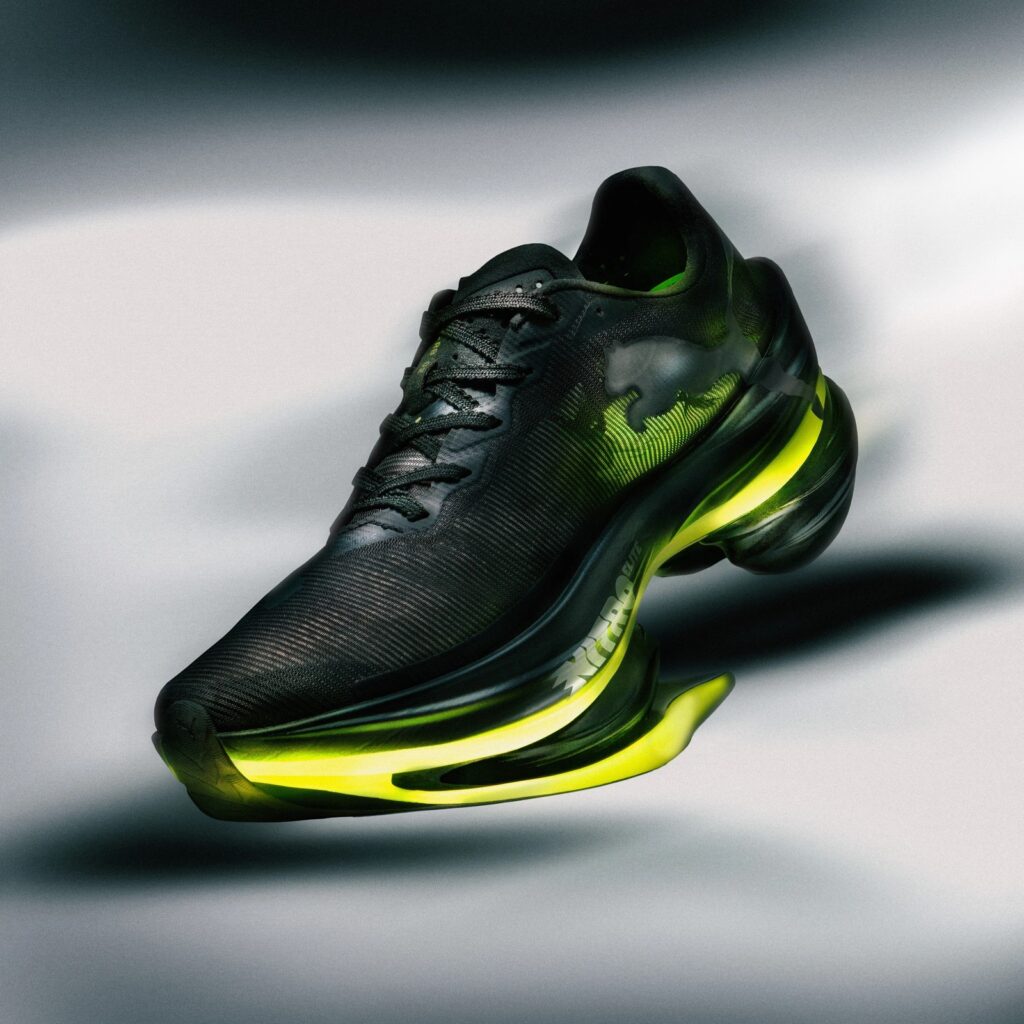
PUMA unveiled the FAST-RB NITRO Elite 2 on October 23 and gave it a launch date five days later, October 28. It is the second shoe in a line PUMA built specifically to break the rules that govern every other racer the company sells. The announcement says the shoe is not race legal. It also says internal testing makes it the most efficient road shoe PUMA builds. Those two sentences sit next to each other on purpose.
World Athletics caps road racing shoes at 40 millimeters of stack and one embedded plate, and almost every carbon shoe on the market is engineered right up against that ceiling. PUMA’s answer was to run two lines at once. The FAST-R, without the B, is the legal one, the split-midsole racer PUMA has now taken through three generations and the shoe its marathon roster actually competes in. The FAST-RB is the branch that stops pretending. The first one stood 58 millimeters at the heel and carried three plates, which puts it roughly 18 millimeters over the stack limit and two plates past the plate limit. Nothing about that shoe was an accident or a miscalculation. PUMA designed a product it knew no athlete could wear to a finish line, then sold it to people who were never going to be drug tested anyway. The split between the two lines lets PUMA keep a credible competition shoe and a showpiece without either one having to answer for the other.
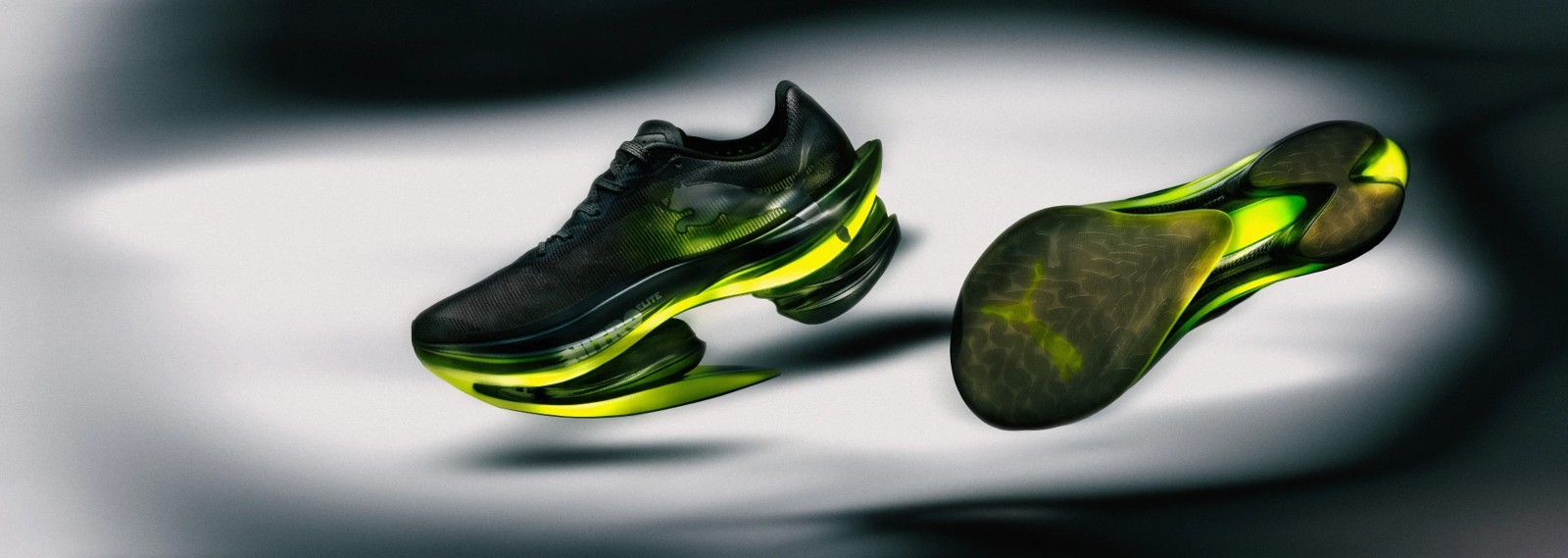
The second version is a simpler object than the first. Where the original stacked three plates, this one uses two fused carbon-fiber PWRPLATES forming what PUMA calls a springboard architecture, and the brand frames the reduction as the point rather than a compromise. Taking a plate out left more room for NITROFOAM ELITE, the compound PUMA says returns more energy than anything else it has tested. The geometry around it was reworked for a smoother transition, the upper is ULTRAWEAVE, and the outsole is PUMAGRIP. The numbers PUMA published are specific. A UK 8 weighs 250 grams, a UK 4.5 weighs 206 grams, the drop is 8 millimeters, and the stated lifespan is 320 kilometers, which is about 200 miles. Romain Girard, PUMA’s VP of Innovation, says two years of lab work and athlete testing went into it, and that simplifying the design is what produced the highest energy return the company has recorded.
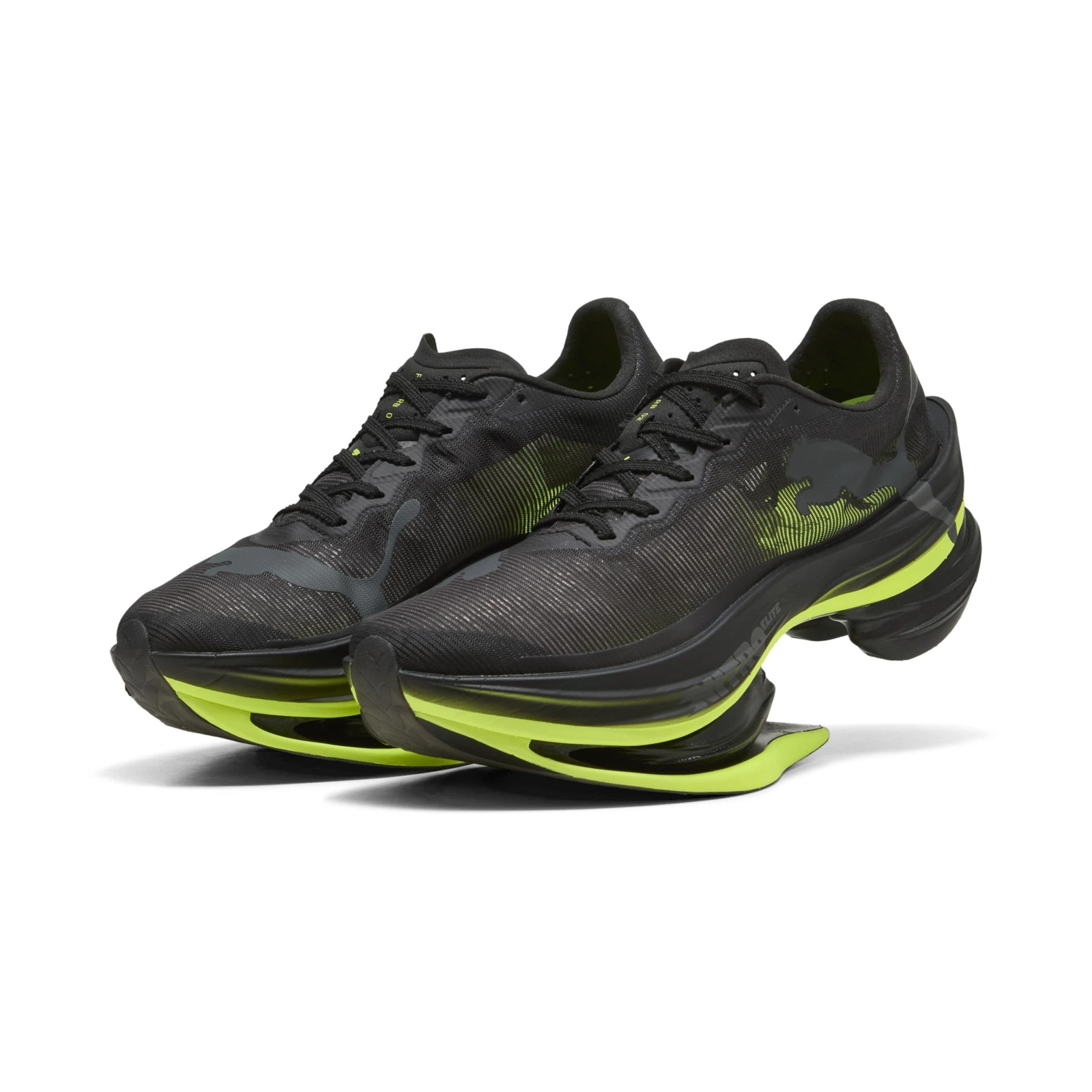
That lifespan figure is the most honest thing in the release. Two hundred miles is seven or eight marathons of training, or a couple of months of real mileage, and PUMA printed it rather than burying it. A shoe like this is a laboratory the brand has decided to sell tickets to. It exists so the NITRO Lab can find out what the foam does when nobody is checking the stack height, and so the answer arrives attached to a product rather than a white paper. PUMA spent most of the 2010s absent from serious road racing, and the route back was never heritage or a signature athlete. It was building platforms strange enough that the running press had to stop and explain them, which turned out to be cheaper than advertising. The risk in a shoe like this is that it reads as a stunt, and the thing keeping it on the right side of that line is that PUMA is putting real published numbers against it instead of adjectives. The FAST-R NITRO Elite 3 is where that work pays off on a start line. This is where it goes to see what happens next.
PUMA published a European figure of 350 euros and has not published a United States number, so the American price is unconfirmed until the shoe appears on PUMA.com. For reference, the race-legal FAST-R NITRO Elite 3 sits at $300 on this side, and the Hybrid RCN Hyrox Nitro Elite runs $275 using foam from the same program. Supershoe pricing has been climbing across the category for three years, something adidas tested on the trail side and Nike has pushed at the top of its racing line. A limited, deliberately illegal shoe is the one place in the range where a brand can charge whatever the curiosity is worth.
The FAST-RB NITRO Elite 2 launches October 28 with limited pairs worldwide, through PUMA.com, select PUMA stores and select retailers across the United States, the United Kingdom, Central Europe, the Nordics, Latin America, Thailand, Japan, China and Australia. PUMA has not published a style code with the announcement, and the United States retail price has not been confirmed. Anyone planning to buy a pair should treat the October 28 drop as a limited release rather than a general one.
-->